Affiliate Content SEO Strategy 2026: Rank Without Chasing Keywords
-
 OppMint Team
 - 18 Jun, 2026
Most new affiliate sites fail at SEO the same way: they write 50 articles about “best X for Y,” all targeting transactional keywords, and none of them rank.
Google doesn’t rank collections of product reviews. It ranks authoritative resources that help people make decisions. This article covers the affiliate content SEO strategy that works in 2026.
The Problem With Most Affiliate Content Strategies
Here’s what usually happens:
- Someone runs a keyword tool and exports 100 “best X” keywords
- They write 50 product review articles in 2 months
- None of them rank past page 3
- They conclude “SEO is dead” or “this niche is too competitive”
What’s missing? Context. Google doesn’t judge pages in isolation. It judges domains based on the complete body of knowledge they publish about a topic.
A site with 50 “best X” pages but zero explanation of why those products matter, how to choose, what problems they solve, or what mistakes to avoid is not an authority—it’s a coupon site.
The 2026 Affiliate Content Framework
This strategy builds authority in four layers, ordered by publication priority.
Layer 4: Transactional content (product reviews, comparisons)
Layer 3: Decision content (buying guides, how to choose)
Layer 2: Educational content (problems, solutions, terminology)
Layer 1: Pillar pages (complete topic overviews)
Most sites start at Layer 4. They fail because they skipped Layers 1-3.
Layer 1: The Pillar Page
Start with one pillar page per major topic cluster. This is the definitive guide to everything a beginner should know about the subject.
Example for a fitness affiliate site:
- Pillar: “How to Start Working Out at Home: Complete Beginner’s Guide”
- Covers: equipment categories, training styles, common mistakes, progress tracking, recovery
Why this works first:
- Pillar pages naturally attract backlinks
- They establish topical breadth
- You’ll build internal links to every other article you write
- Readers who land here stay on site longer
Pillar page structure:
1. Introduction (who this is for, what they'll learn)
2. Core concepts and terminology
3. Common problems and mistakes
4. Solution categories (not specific products yet)
5. How to evaluate options
6. Next steps framework
7. FAQ
8. Resource links
💡 Reference: How to Build an Affiliate Website in 2026 covers pillar page architecture in detail.
Layer 2: Educational Content
These articles answer the questions people have before they start comparing products. They’re mid-funnel, high-intent, and surprisingly easy to rank for.
Examples:
| Niche | Educational Article Titles |
|---|---|
| Fitness | ”How Many Days a Week Should a Beginner Work Out?" |
| "Dumbbells vs Resistance Bands: Which is Better for Beginners?" | |
| "How Long Does It Take to See Results From Working Out?” | |
| Camping | ”What Temperature is Too Cold for Tent Camping?" |
| "How to Keep Food Cold While Camping Without a Cooler" | |
| "Can You Use a Regular Sleeping Bag for Backpacking?” |
Why this works:
- Lower competition than “best X” keywords
- Readers in this stage become your highest-converting visitors later
- Natural internal links to your product reviews
- Builds E-E-A-T faster than pure transactional content
Template for educational articles:
1. Direct answer to the question
2. Detailed explanation (why, how, when)
3. Common mistakes to avoid
4. Factors to consider
5. Recommended approaches for different situations
6. Related resources (internal links)
Layer 3: Decision Content
These are the “how to choose” articles that bridge education and purchase. This is where you start introducing products but not in a review format.
Examples:
- “How to Choose Dumbbells for Home Use: 7 Factors That Matter”
- “What Size Resistance Bands Do I Need? Complete Buying Guide”
- “How Much Should You Spend on Your First Camping Tent?”
Decision content should answer:
- What features actually matter (vs marketing fluff)
- What tradeoffs people face
- What beginners usually get wrong
- Price ranges and what you get at each level
- How to prioritize features based on their situation
This is the most underrated layer of affiliate content. It converts extremely well because you’re helping someone narrow down their options before they see your product recommendations.
Layer 4: Transactional Content
Finally, you write the product reviews and “best X for Y” articles.
But now they’re different:
- Each review links back to the educational content that explains why those features matter
- Each comparison links to the decision content that frames the tradeoffs
- Readers arrive already understanding the topic, not just looking for the cheapest option
Key rule for transactional content:
Never write a “best X” article unless you already have at least 3 educational articles and 1 decision article about that category.
Internal Linking Strategy for Affiliate Sites
Internal linking is where most affiliate sites lose 50% of their potential SEO value. Follow this pyramid pattern:
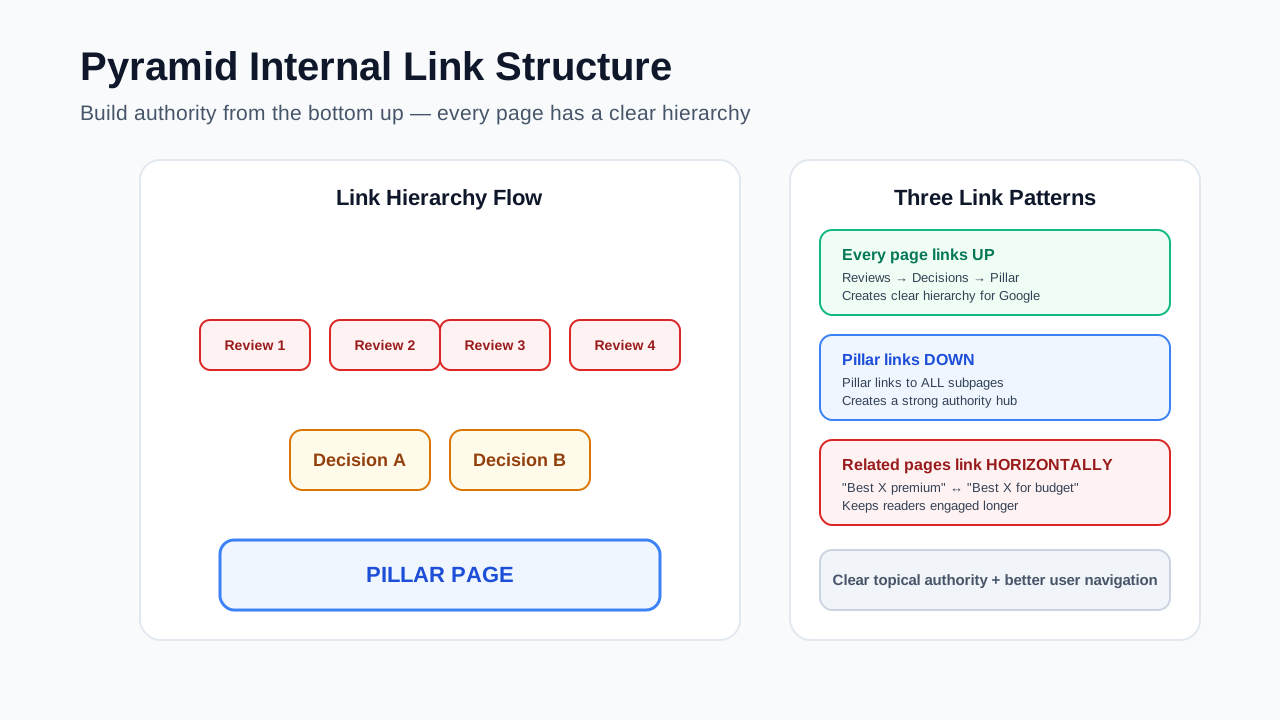
The Pyramid Link Structure
                    Pillar Page
                 /       |        \
        Decision 1  Decision 2  Decision 3
        /    \      /    \      /    \
  Review A  Review B  Review C  Review D
Rules:
- Every page links up - Reviews link to decision pages, which link to the pillar
- Pillar links down - The pillar links to every decision page and key reviews
- Related reviews link horizontally - “Best budget” links to “best premium” and vice versa
- Educational articles link to relevant decisions - Not directly to product pages unless it makes sense
What to avoid:
- ❌ Random “related posts” widgets at the bottom with no contextual relevance
- ❌ Every page linking to the same 5 affiliate products in the sidebar
- ❌ Orphan pages that nothing links to
- ❌ The homepage being the only page that links to everything
💡 Deep dive: Our Internal Linking Best Practices guide has the exact link count targets and placement rules.
Content Cadence and Publication Order
This is the order you should publish in. Don’t skip ahead.
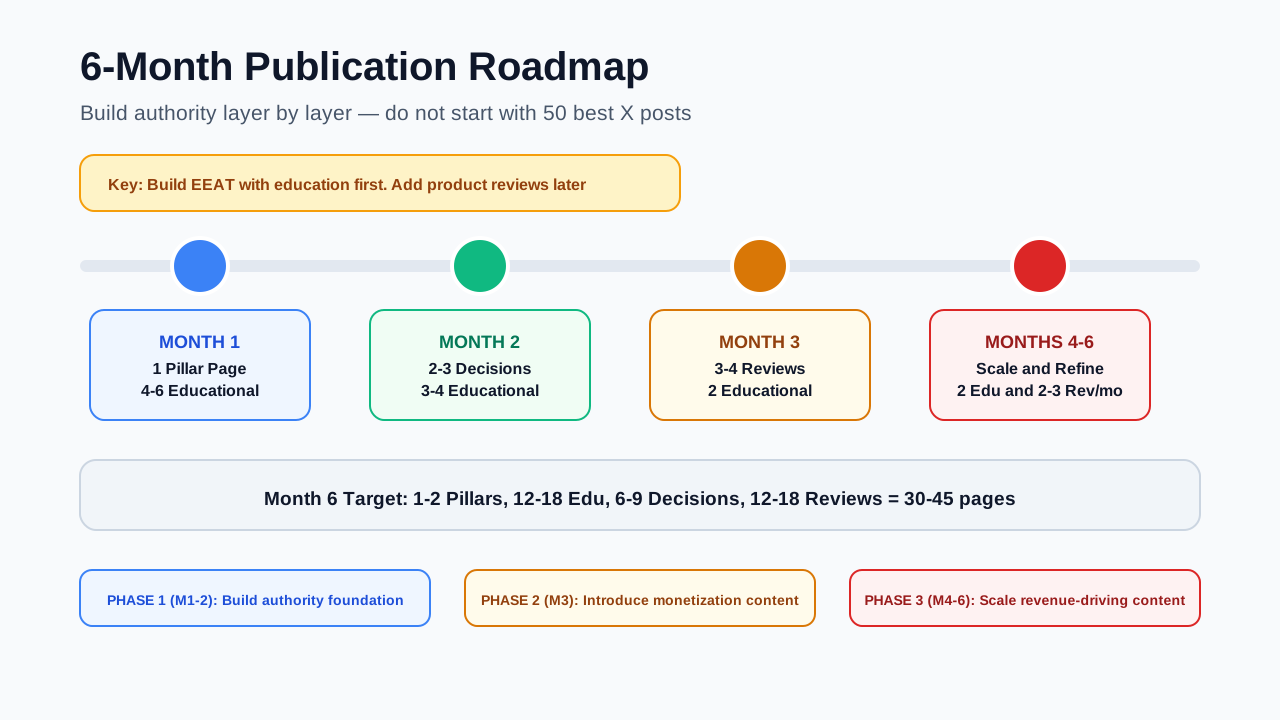
Month 1:
- 1 pillar page
- 4-6 educational articles
- Total: 5-7 pages
Month 2:
- 2-3 decision articles
- 3-4 educational articles
- Update and expand the pillar
- Total: 6-8 pages
Month 3:
- 3-4 product reviews / “best X” articles
- 2 more educational articles
- Audit internal links
- Total: 6-7 pages
Month 4 onwards:
- 2 educational / decision articles
- 2-3 product reviews
- 1 pillar expansion or update
By Month 6, you’ll have:
- 1-2 pillar pages
- 12-18 educational articles
- 6-9 decision articles
- 12-18 product reviews
- A complete internal link structure that Google can crawl and understand
That’s 30-45 pages total. More importantly, it’s a cohesive body of knowledge on a topic, not a random collection of keywords.
Authority Signals Google Actually Cares About
In 2026, these matter more than exact keyword matching:
1. Content Freshness
Product categories change. If you’re reviewing 2026 products but your “how to choose” article still says “in 2022,” that’s a signal.
Update decision content at least quarterly. Pillar pages need annual refreshes.
2. Depth of Coverage
Does your site cover:
- Problems
- Solutions
- Comparisons
- Mistakes to avoid
- Edge cases
- Different user segments
If you only cover products, you’re 1/6th of the way there.
3. Linking Pattern
Are internal links contextual and useful, or are they keyword-stuffed anchor text spam?
Google can tell the difference between: ✅ “If you’re not sure what size you need, read our resistance band sizing guide” ❌ “Best resistance bands for beginners”
4. User Signals
Dwell time matters more than ever. Articles that answer the question and then give next steps keep people on site. Articles that immediately jump to “here are the 10 best” send people bouncing back to search results.
Common Mistakes to Avoid
Mistake 1: Starting with product reviews
We covered this. It’s the #1 reason new affiliate sites fail in 2026.
Mistake 2: Chasing every keyword in the niche
You don’t need to cover every angle of every product. Pick 1-2 clusters, dominate them, then expand.
Mistake 3: Ignoring the no-intent searchers
Not everyone searching for “how heavy should dumbbells be” wants to buy them today. But if you help them understand the answer, they’ll come back to you when they are ready to buy.
Mistake 4: Forgetting that SEO is about real people
Write for the person reading, not for the crawler. If your articles read like they were generated from a keyword list, Google will eventually figure it out.
Measuring If It’s Working
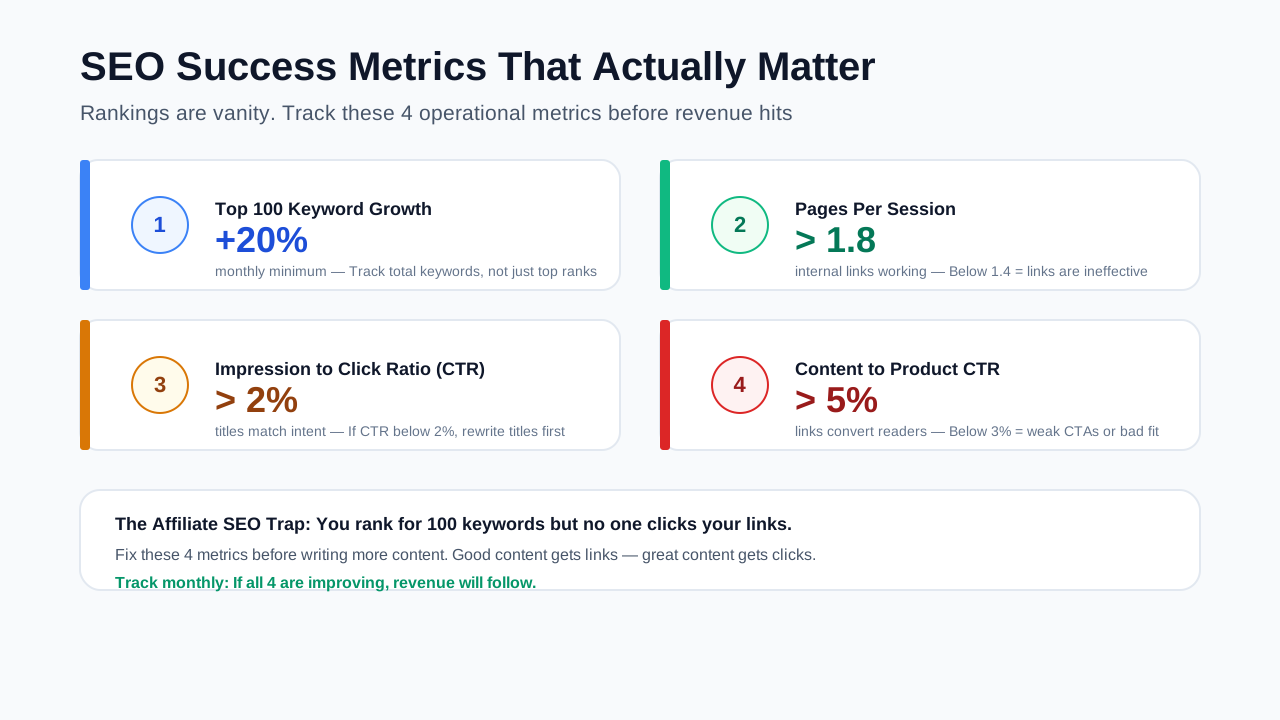
Don’t just track rankings. Track these operational metrics to know if your SEO is actually working before revenue hits:
| Metric | Target | What It Means |
|---|---|---|
| Top 100 keyword count | Growing 20%+ monthly | Google is recognizing your topical coverage |
| Average pages per session | > 1.8 | People are following internal links |
| Pillar page backlinks | Steadily increasing | Other sites find your core content useful |
| Impressions / clicks ratio | > 2% | Your titles and descriptions match intent |
| Click-through rate from content to products | > 5% | Your internal linking is actually converting |
Summary
The 2026 affiliate SEO strategy isn’t about more keywords. It’s about better structure:
- Start broad - Pillar pages first, establish the topic
- Build context - Educational content that answers real questions
- Bridge to purchase - Decision content that helps people evaluate options
- Add transactional content last - Reviews and comparisons that benefit from all the context
- Link intentionally - Follow the pyramid structure, not random related posts
This strategy takes 3-6 months to show real results, but when it does, you’re not just ranking for “best X.” You’re ranking for the entire topic. And when Google ranks the whole site, not just individual pages, you’ve built something that lasts.
Next steps:
- Read the Complete Affiliate Website Guide for pillar page templates
- Check Affiliate SEO: Beyond the Basics for technical SEO requirements
- Learn How Content Sites Make Money beyond just affiliate links