Make Money Online in 2026: 12 Real Business Models Ranked
-
 OppMint Team
 - 17 Jun, 2026
Most “make money online” lists are either fantasy or recycled side-hustle advice. They mix paid surveys, dropshipping, affiliate marketing, freelancing, YouTube, newsletters, AI tools, and digital products as if they all have the same cost, risk, and timeline.
They do not.
This guide ranks 12 real online business models for solo founders in 2026 using five practical criteria: startup cost, skill curve, time to first dollar, scalability, and defensibility.
💡 Deep dive on affiliate: For the complete end-to-end guide to building an affiliate site in 2026, see the Affiliate Website Complete Guide.
The scoring model
Each business model gets a 1-5 score on five axes:
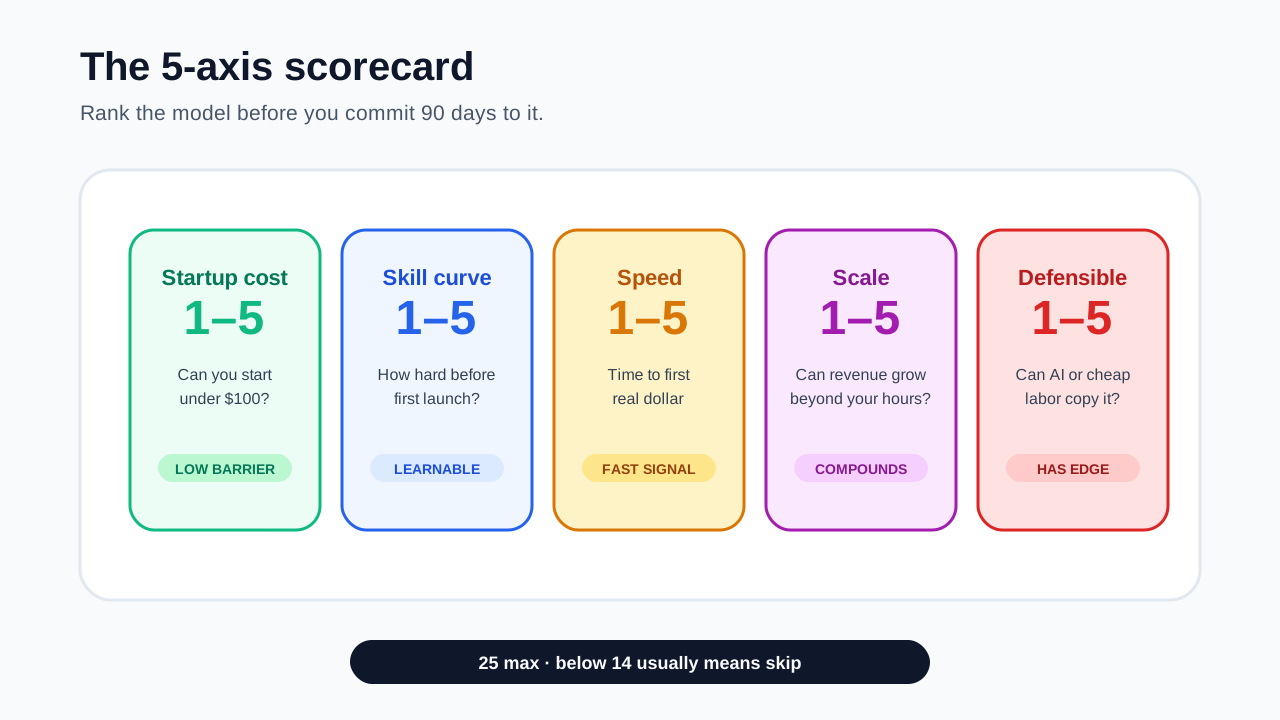
| Axis | What it measures |
|---|---|
| Startup cost | Can you start under $100, $500, or $2,000? |
| Skill curve | How much specialized skill is required before launch? |
| Time to first dollar | How quickly can a beginner get paid? |
| Scalability | Can it grow beyond your personal hours? |
| Defensibility | Can AI or cheap competitors copy it easily? |
A perfect score is 25. Anything below 14 is usually not worth starting unless you already have an advantage.
If you want beginner stories rather than a ranking matrix, start with real examples of people making money online. If you want zero-budget starting points, see free ways to make money online.
Quick ranking table
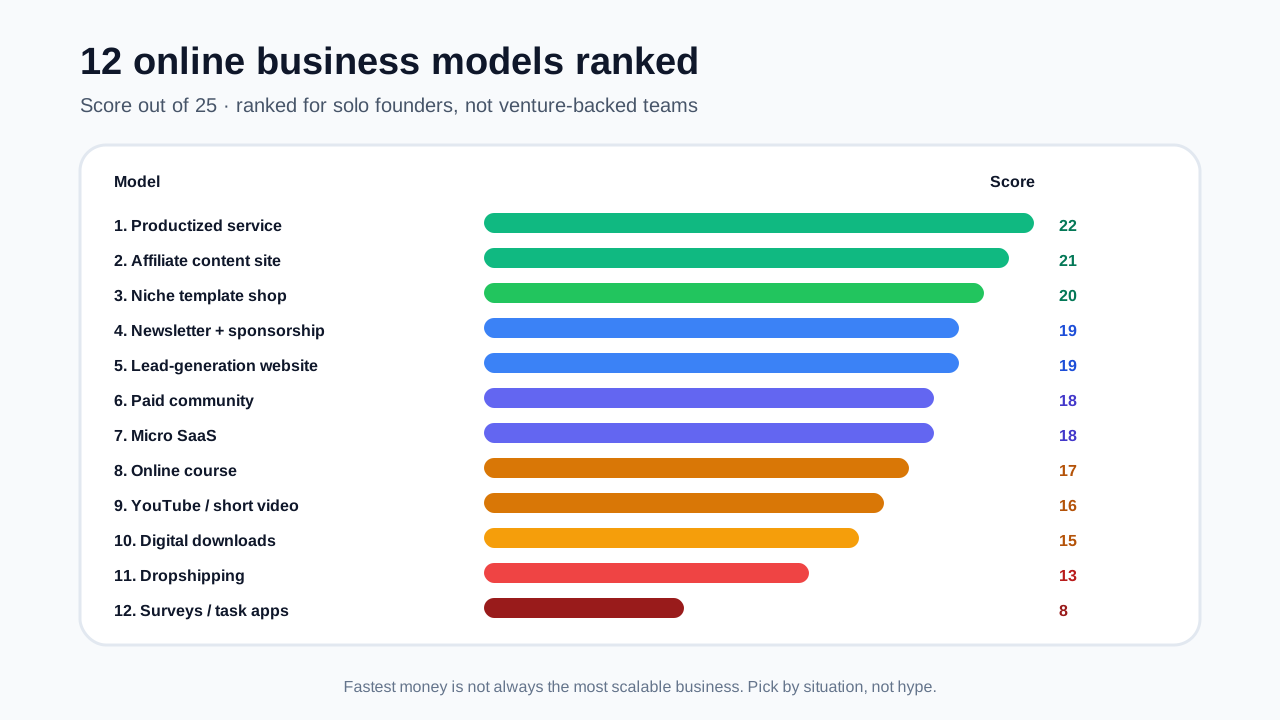
| Rank | Model | Score | Best for | First-dollar timeline |
|---|---|---|---|---|
| 1 | Productized service | 22 | Skilled beginners | 7-30 days |
| 2 | Affiliate content site | 21 | Patient builders | 3-6 months |
| 3 | Niche template shop | 20 | Designers / operators | 30-60 days |
| 4 | Newsletter + sponsorship | 19 | Strong writers | 3-9 months |
| 5 | Lead-generation website | 19 | Local SEO builders | 2-6 months |
| 6 | Paid community | 18 | Existing audience owners | 3-12 months |
| 7 | Micro SaaS | 18 | Developers | 3-12 months |
| 8 | Online course | 17 | Domain experts | 2-9 months |
| 9 | YouTube / short video | 16 | Creators | 6-18 months |
| 10 | Digital downloads | 15 | Designers / educators | 30-90 days |
| 11 | Dropshipping | 13 | Paid media specialists | 30-120 days |
| 12 | Surveys / task apps | 8 | Cash emergencies only | Same day |
The important takeaway: the best beginner model is not always the most scalable model. Productized services earn fastest. Affiliate content compounds slowly. Micro SaaS scales well but needs more skill and patience.
Productized service
Score: 22/25
A productized service packages one specific outcome for one specific buyer: “I will set up your local business website in 7 days for $900,” or “I will convert your messy Notion workspace into a client portal for $500.”
Why it ranks first:
- Startup cost is almost zero.
- You can get paid before building a big audience.
- Scope is clearer than open-ended freelancing.
- You learn real customer pain before building products.
The downside is that income still depends on your time. You escape that later by turning repeated work into templates, SOPs, or a small team.
Best first offer:
Audience: solo consultants
Problem: no trustworthy website
Offer: 5-page site + contact form + analytics
Price: $500-1500
Delivery: 7 days
If you are trying to choose between service income and affiliate content, affiliate content vs service lead generation explains the tradeoff.
Affiliate content site
Score: 21/25
An affiliate content site earns when readers buy through your recommendations. It is slow, but it compounds. One good comparison page can earn for years if it stays updated.
Why it ranks high:
- Low cost to start.
- Strong upside if you choose recurring programs.
- Works well with SEO and evergreen content.
- Can be built alongside a day job.
Why it fails:
- Thin “best X” posts are no longer enough.
- Amazon-only sites have weak economics.
- Most beginners quit before month 6.
If this is the model you choose, use the full affiliate website 2026 guide rather than starting from a generic theme and random product reviews.
Best first 90 days:
- Pick one niche using a 4-axis scorecard.
- Publish 3 cornerstone reviews.
- Publish 8 supporting how-to posts.
- Apply to 3-5 non-Amazon programs.
- Build internal links from supporting posts into cornerstone pages.
Niche template shop
Score: 20/25
A template shop sells reusable assets: Notion templates, Framer sections, Webflow layouts, spreadsheet calculators, resume packs, content calendars, prompt packs, or small automation workflows.
It works when the template saves time for a buyer who already knows they have the problem.
Good examples:
- A budget spreadsheet for freelance designers
- A client onboarding Notion system for consultants
- A content calendar for real estate agents
- A Zapier automation pack for newsletter operators
The challenge is distribution. Templates do not sell themselves. You need SEO, communities, Gumroad/Payhip marketplace traffic, or a newsletter.
Best first product: solve one painful workflow you personally understand, price it at $19-49, and ship a simple landing page in one weekend.
Newsletter + sponsorship
Score: 19/25
A newsletter is not a business model by itself. It becomes one when you pair it with sponsorship, affiliate offers, paid reports, or a productized service.
Why it works:
- You own the audience.
- Email converts better than social reach.
- Sponsorship becomes viable at small but focused scale.
Why it is hard:
- Growth is slow without distribution.
- Writing every week is a commitment.
- Broad newsletters are hard to monetize.
A good solo-founder newsletter is narrow: “weekly AI tools for local service businesses” beats “tech news.”
Revenue math:
2,000 subscribers
40% open rate
800 opens
$40 CPM sponsorship
= $32 per issue
That sounds small, but with affiliate offers and consulting upsells, the list becomes a trust asset.
Lead-generation website
Score: 19/25
A lead-gen website ranks for local or niche service queries, collects inquiries, and sells those leads to service providers.
Examples:
- “best roof repair in Austin”
- “small business website design in Denver”
- “emergency plumber in Queens”
- “bookkeeping services for dentists”
Why it works:
- Intent is high.
- Local SEO is often less competitive than national affiliate SEO.
- Leads have clear monetary value.
Why it fails:
- You need reliable partners.
- Bad leads damage relationships.
- Some niches require licenses or compliance awareness.
A small lead-gen site can start as a simple service page + comparison page + contact form. See make money online website types for how lead-gen differs from affiliate and content sites.
Paid community
Score: 18/25
Paid communities work when members need ongoing accountability, access, or peer feedback. They fail when the promise is just “exclusive content.”
Good fits:
- Founders building in public
- Designers preparing portfolios
- Job seekers in a specific role
- Local service owners learning SEO
- Espresso enthusiasts comparing gear and recipes
Bad fits:
- Generic entrepreneurship
- Generic AI tips
- Generic investing chat
A community needs a ritual: weekly critique, monthly office hours, shared challenge, or member directory. Without ritual, churn kills it.
Micro SaaS
Score: 18/25
Micro SaaS has strong upside, but it is not the easiest beginner model. You need product judgment, technical skill, support, and distribution.
Good micro SaaS ideas are usually boring:
- Invoice reminder for one vertical
- Review request automation for local businesses
- Client portal for consultants
- Reporting dashboard for a niche ad channel
Bad ideas are generic:
- “AI writing tool”
- “project management app”
- “all-in-one CRM”
The best path is to start with a productized service, repeat the same workflow 10 times, then automate the repeated part.
Online course
Score: 17/25
Courses still sell, but low-effort courses are dead. Buyers can get generic knowledge from YouTube and AI. A paid course must offer structure, feedback, templates, or outcome-specific guidance.
Good course topics:
- A narrow professional outcome
- A certification-like skill
- A repeatable business process
- A tool workflow with templates
Example: “How local accountants can get 10 SEO leads per month” is stronger than “SEO course.”
Courses pair well with newsletters and communities. They are weaker as a first business if you have no audience.
YouTube / short video
Score: 16/25
Video can build trust faster than text, but monetization takes time. The best path is not relying on AdSense. Use video to feed services, affiliate offers, consulting, and email.
Good format:
- One narrow problem
- Repeatable episode structure
- Clear buyer intent
- Link to a useful owned asset
Bad format:
- Reacting to trends with no offer
- Broad productivity tips
- AI-generated faceless spam
Video is powerful if you can be consistent for 6-12 months. It is brutal if you need money next week.
Digital downloads
Score: 15/25
Digital downloads include checklists, templates, planners, swipe files, Notion systems, spreadsheets, and prompt packs.
They are easy to create and hard to sell.
Use them as:
- Lead magnets
- Low-ticket upsells
- Add-ons to a service
- Trust builders for a larger offer
Do not expect a $9 PDF to replace a business unless you have distribution.
Dropshipping
Score: 13/25
Dropshipping is not dead, but it is not beginner-friendly in 2026. Paid ads are expensive, suppliers are inconsistent, shipping expectations are high, and customers expect brand-level support.
It can work if you already understand:
- Paid media
- Creative testing
- Supplier negotiation
- Customer support
- Unit economics
For most solo founders, affiliate content or productized service is safer. Dropshipping only makes sense if paid acquisition is already your skill.
Surveys and task apps
Score: 8/25
Surveys, task apps, and microtask platforms can produce same-day cash, but they do not compound. They are closer to emergency cash flow than business building.
Use them only when you need immediate small income. Do not build your 2026 plan around them.
Which model should you choose?
Use this decision rule:
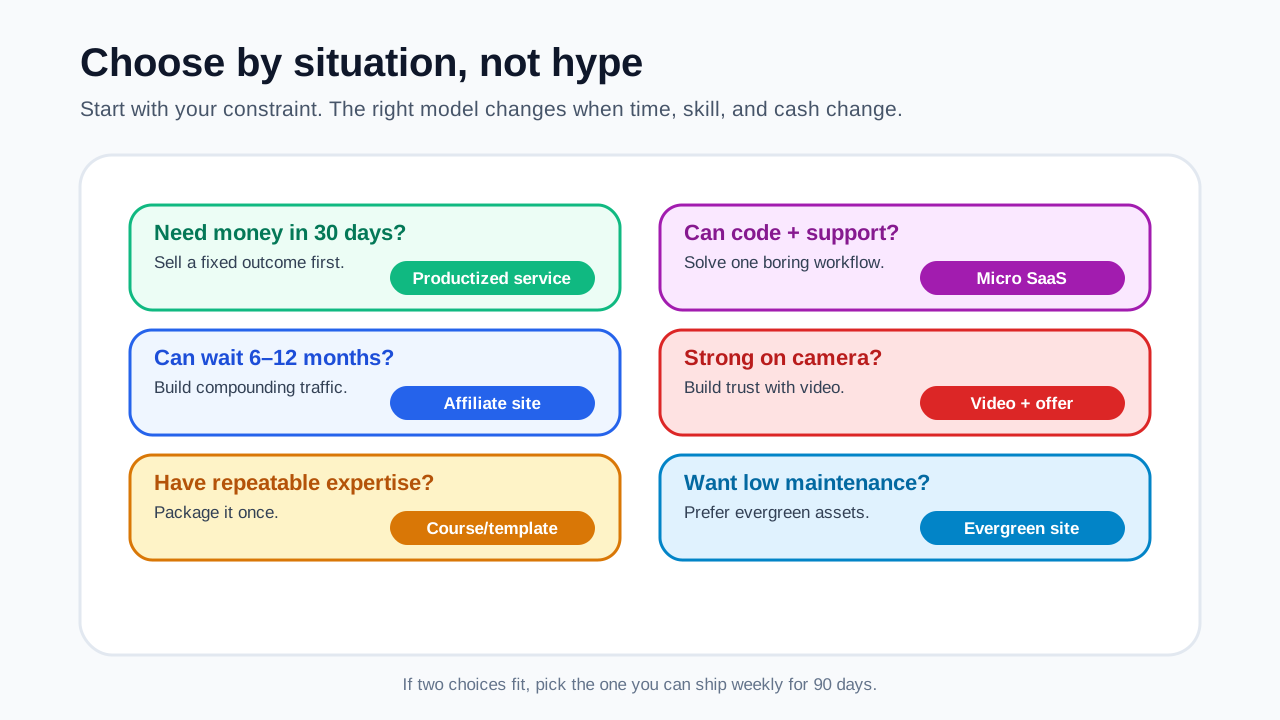
| Your situation | Best first model |
|---|---|
| You need money in 30 days | Productized service |
| You can wait 6-12 months | Affiliate content site |
| You design systems/templates well | Niche template shop |
| You already have expertise + audience | Course or community |
| You can code and handle support | Micro SaaS |
| You are strong on camera | Video + offer stack |
| You want low-maintenance compounding | Evergreen content site |
If you want a slower but compounding path that does not require posting daily, low-maintenance website business models is the next practical branch.
A 90-day plan that works for most beginners
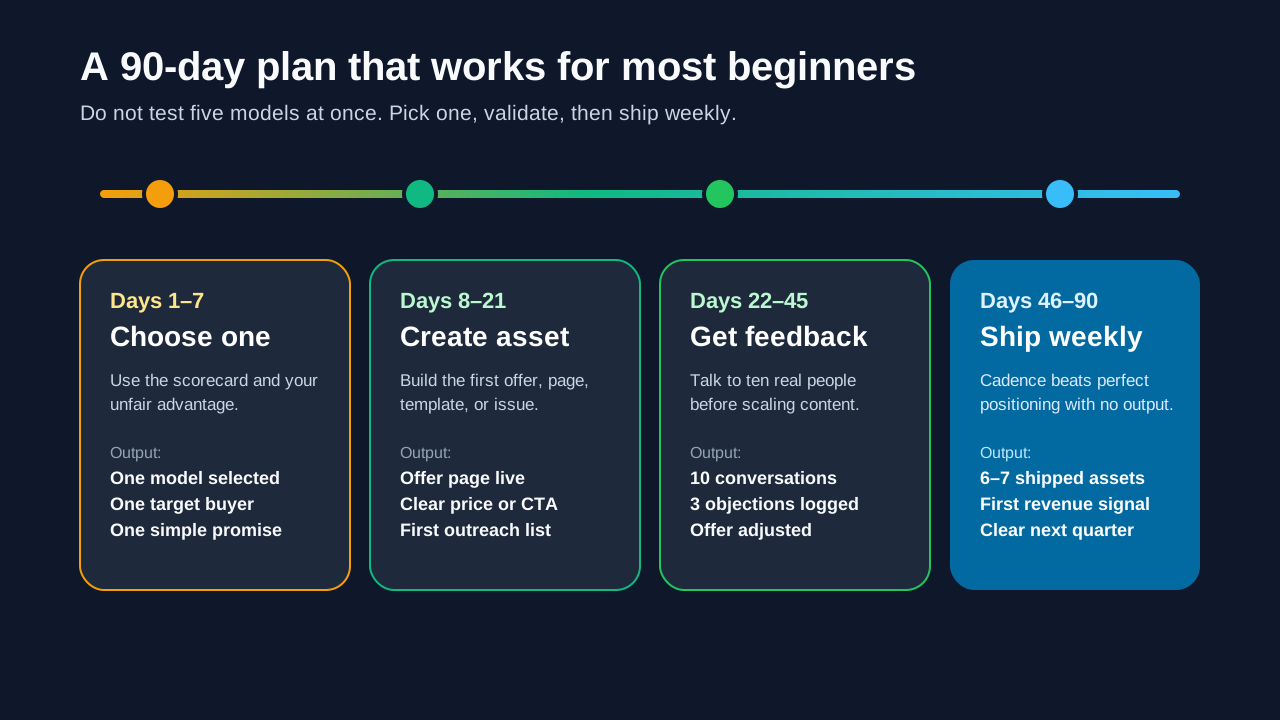
Days 1-7: choose one model
Do not test five models at once. Pick one using the score table and your unfair advantage.
Days 8-21: create the first offer or asset
- Service: one fixed-scope offer
- Affiliate: one niche scorecard + first cornerstone outline
- Template: one paid template + landing page
- Newsletter: one promise + 3 sample issues
- Lead-gen: one city/niche landing page
Days 22-45: get feedback before scaling
Talk to 10 real people. If nobody cares, change the offer before writing 40 blog posts.
Days 46-90: ship weekly
The business model matters, but cadence decides whether it survives. Weekly shipping beats perfect positioning with no output.
FAQ
What is the most realistic way to make money online in 2026?
For most beginners, productized service is fastest and affiliate content is the best compounding path. Productized service gets paid sooner; affiliate content builds slower but can detach from your hours.
Can AI make any of these easier?
Yes, but AI helps with research, outlines, drafts, tables, and operations. It does not replace market selection, customer conversations, original experience, or distribution. A practical AI workflow for solo operators is covered in AI tools for solo founders building content sites.
What should I avoid?
Avoid models where your only edge is “I can generate content with AI.” Everyone else can do the same. Pick a niche where you have evidence, relationships, expertise, or distribution.
Is affiliate marketing still worth it?
Yes, but not as thin product listicles. It works when the site helps readers make decisions and uses programs with real unit economics. Amazon-only sites are much weaker than SaaS, hosting, course, or niche tool programs.
How much money do I need to start?
A service can start at nearly $0. A static affiliate site can start around $12/year for a domain if you can handle the technical setup. A WordPress site usually costs $200-500 in year one. Paid ads or dropshipping can require thousands.