Affiliate SEO: How to Grow an Affiliate Website Safely
-
 OppMint Team
 - 06 Jun, 2026
Affiliate SEO is the practice of getting search traffic to pages that help readers choose products, services, tools, or platforms. It can be a strong growth channel for an affiliate site, but only if the content is genuinely useful.
The mistake beginners make is thinking affiliate SEO means “rank a best-products page and collect commissions.” That is too thin. Search engines and readers both need more than a list of links.
A good affiliate SEO page helps someone understand a problem, compare options, avoid a bad purchase, and take the next step with confidence.
What makes affiliate SEO different
Normal SEO can target many goals: education, brand awareness, support, leads, or product sales. Affiliate SEO has a sharper commercial angle because the page often includes recommendations.
That creates two pressures:
- the page must be useful enough to deserve search traffic;
- the page must be trustworthy enough for a reader to click a recommendation.
If the page only repeats product claims, it is weak. If it only chases keywords without solving the reader’s problem, it is also weak.
Affiliate SEO works best when you treat the page like a decision aid.
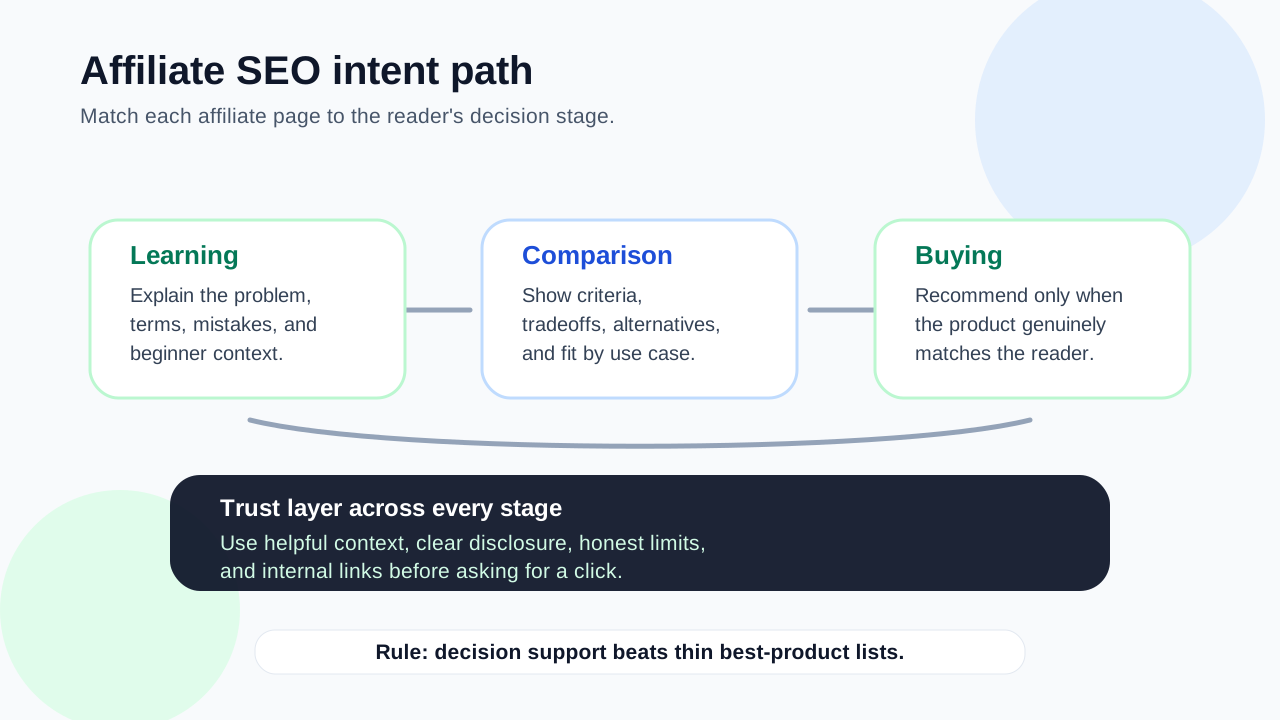
Start with search intent
Search intent means what the person is really trying to do.
For affiliate sites, you will usually see a few intent types:
Learning intent
The reader is still figuring out the problem.
Examples:
- what is affiliate marketing;
- how does web hosting work;
- why is my WordPress site slow.
These pages may not convert immediately, but they build trust and create internal links to more commercial pages.
Comparison intent
The reader is choosing between options.
Examples:
- WordPress vs website builder for affiliate sites;
- shared hosting vs VPS for a small blog;
- tool A vs tool B for keyword research.
These pages can convert well because the reader is closer to a decision.
Buying intent
The reader is close to taking action.
Examples:
- best hosting for a beginner affiliate site;
- best email tool for a small newsletter;
- affordable WordPress hosting for small websites.
These pages need extra care. They should explain fit, trade-offs, limitations, and who should not buy.
Avoid thin affiliate pages
A thin affiliate page is a page that mostly exists to send visitors somewhere else. It may have a short intro, copied product descriptions, repeated “best” claims, and a table full of links.
That kind of page is risky because it does not add much value.
To avoid the thin-page problem, add real usefulness:
- explain the reader’s situation;
- show how to choose;
- include use-case differences;
- mention downsides and limits;
- answer beginner questions;
- link to supporting tutorials;
- keep the content updated.
A simple test helps:
If every affiliate link disappeared, would the page still help the reader?
If yes, you are closer to a useful affiliate SEO page.
Build topic clusters, not isolated posts
One affiliate post rarely does all the work. A stronger site groups related pages together.
For example, a small hosting affiliate cluster could include:
- a beginner guide to choosing hosting;
- a comparison of hosting types;
- a tutorial for setting up WordPress;
- a checklist for launch mistakes;
- a buying guide for one specific audience;
- a troubleshooting page for speed or SSL issues.
The buying guide can link to the tutorials. The tutorials can link back to the buying guide when a tool or service is relevant. This helps readers move naturally through the site.
On OppMint, that is why affiliate content should connect to site-building guidance, Domains & Hosting, monetization guidance, and SEO Traffic instead of living alone.
Write for the person who is about to make a mistake
The best affiliate SEO pages often help readers avoid a bad decision.
A beginner might buy hosting that is too expensive. They might choose a tool before they have traffic. They might join an affiliate program before the site has enough useful content. They might publish product roundups with no disclosure.
Your page should catch those moments.
Instead of writing “this is the best tool,” write things like:
- “Choose this if you want the simplest setup.”
- “Avoid this if you need advanced control.”
- “Do not pay for this yet if you have no traffic.”
- “This is better for one site, not a portfolio of sites.”
That tone builds trust because it sounds like a real person helping, not a sales script.
Use disclosure as part of trust
Affiliate SEO pages should be transparent about paid links.
A clear disclosure does not ruin conversions. Hidden relationships are more damaging because they make the whole page feel suspicious when readers notice.
Place disclosure where it is visible. Use normal language. Explain that you may earn a commission at no extra cost to the reader, and keep the recommendation focused on fit.
Disclosure should not be the only trust signal. You also need balanced writing, useful details, and honest limits.
Internal links should guide the decision
Internal links are not just for SEO. They should help the reader take the next logical step.
A beginner reading an affiliate SEO guide may need:
- a broader start-here path;
- a monetization overview at Monetization Paths;
- a site-building path at Build Websites;
- a focused category like Affiliate Sites;
- service help if they need a custom plan.
Do not dump links randomly. Add them when they answer a question the reader is likely to have at that point.
What to include on an affiliate SEO page
A useful affiliate SEO page usually needs these parts:
A clear promise
Tell the reader what decision the page will help them make.
The audience
Say who the page is for and who it is not for. This prevents overbroad recommendations.
The criteria
Explain how options are judged. For example: ease of setup, beginner support, long-term cost, SEO flexibility, update burden, or integration needs.
The recommendation
Recommend only after the reader understands the criteria.
The trade-offs
Every option has limits. Mention them.
The next step
Tell the reader what to do after reading: compare, set up, avoid, delay, or ask for help.
This structure turns a keyword page into a practical decision page.
A beginner affiliate SEO workflow
Here is a simple workflow for a new site.
1. Choose one topic area
Do not start with ten unrelated niches. Pick one area where people regularly compare tools, services, or products.
2. Map questions before products
List what the reader asks before buying. Then map pages to those questions.
3. Publish support pages first
Create useful non-commercial guides. These make the site more trustworthy and give your buying pages context.
4. Publish one commercial page
Write one focused buying or comparison page. Keep it narrow enough to be useful.
5. Add natural internal links
Connect support pages to the commercial page only where it makes sense.
6. Improve from real signals
Watch which pages get impressions, which titles attract clicks, and where readers need clearer answers. Update the site instead of constantly starting new posts.
Mistakes that hurt affiliate SEO
Avoid these patterns:
- copying product descriptions;
- using “best” without explaining best for whom;
- publishing many short pages with the same intent;
- hiding affiliate relationships;
- choosing offers before choosing an audience;
- ignoring technical basics like titles, headings, crawlability, and internal links;
- letting old recommendations become outdated.
The safest long-term path is simple: be useful, be clear, be transparent, and keep improving the pages that matter.
What to do next
If you want affiliate traffic, do not start with links. Start with the reader’s decision.
Use Website SEO Audit to think about site health, then build a small content cluster around one monetizable problem. If you need a broader monetization path, read Affiliate Passive Income.
If you already have a site and want help shaping the structure, see Services for OppMint’s planning and SEO support.