Make Money Online
Read beginner guides about practical ways to make money online with services, content, affiliate income, products, and website-backed income paths.
-
 OppMint Team
 - 25 Jun, 2026
How to Start a Blog in 2026: The Complete Step-by-Step Guide
Wondering if you should start a blog in 2026? The short answer is yes — if you're willing to put in consistent work on quality content and play the long game.This guide walks you through every step, from choosing a niche to making your first $100. We cover what's working in 2026, what to avoid, and how to set realistic expectations. Step 1: Pick Your Blog Niche The first decision is what to blog about. Niche down instead of going broad. A specific micro-niche attracts clearer audience and easier monetization than a general topic. How to choose a good niche in 2026:Pick something you know or enjoy learning about — you'll be writing for months, so interest keeps you consistent. Check for audience demand — are people asking questions about it? Are there existing products or services to promote? Check for content depth — can you write 30+ articles on different sub-topics? Have at least one monetization path — affiliate programs, ads, digital products, services?Popular starting niches in 2026: personal finance, fitness, hobby-specific, tech tutorials, DIY, food, travel (micro-regions), business-to-business topics for small businesses. Step 2: Choose Your Blogging Platform Different platforms fit different goals. Here's how the main options compare in 2026:Platform Best For Cost Control MonetizationSelf-hosted WordPress Full-time/serious bloggers $50-$150/year Full UnlimitedSubstack Writers/newsletter focus Free to start Limited SubscriptionsMedium Writers wanting built-in audience Free Limited Partner ProgramGhost Modern publishing $9-$200/month Good Native subscriptionsWix/Squarespace Visual portfolios/small sites $14-$40/month Good LimitedOur recommendation for most beginners: Start with self-hosted WordPress.org if you want full control, SEO flexibility, and unlimited monetization options. It's the industry standard for a reason. If you're primarily a writer and already have an audience or want to build a newsletter-first business, Substack is worth considering — they handle hosting and payments for you. Step 3: Get Your Domain Name and Hosting Domain NameCost: $10-$15 per year Tips: Keep it short and easy to spell Use .com if available Include your main keyword if it fits naturally Avoid numbers, hyphens, or confusing spellingsHostingCost: $3-$10 per month (most hosts offer a discount for the first year) Beginner-friendly hosts: SiteGround, Bluehost, DreamHost For scaling: Cloudways, WP EngineStep-by-step setup:Buy domain from your registrar (GoDaddy, Namecheap, or through your host) Sign up for hosting Connect domain to hosting (your host will have step-by-step instructions) Install WordPress — most hosts offer one-click WordPress installation nowTotal cost for first year: ~$50-$150. You don't need expensive premium tools to start. Step 4: Set Up Your WordPress Blog After installing WordPress:Choose a theme — start with a free lightweight theme like GeneratePress or Astra Install essential plugins only: SEO: Yoast SEO or Rank Math Backup: UpdraftPlus Caching: WP Rocket or WP Super Cache (free) Contact form: WPForms Lite Antispam: AkismetDon't install 20 plugins "just in case" — too many slow down your site and create security risks. Install only what you actually need.Basic configuration Set your permalinks to "Post name" Create your main pages (About, Contact, Privacy Policy) Set up your menuStep 5: Write and Publish Your First Post Before you write: Do basic keyword research — target long-tail question-based keywords (what, how, why) that people actually search for. You don't need fancy tools; Google's "People also ask" gives you plenty of ideas. Writing process:Outline your post — main H2 sections covering what readers want to know Write your introduction — hook with the problem, promise a solution Fill in each section — give actionable advice, not just theory Add conclusion — summarize and give a clear next step Add images — compress them before uploading to keep pages fastHit publish! Don't wait for "perfect". Publish your first post this week. You'll get better as you go. Step 6: How to Make Money Blogging in 2026 You don't need 100k visitors to start earning. Here are the most common monetization paths for new bloggers: 1. Affiliate Marketing (Best for Beginners) Best for: Almost any niche. You can start once you have some traffic. How it works: You recommend products/services, get a commission when someone buys through your link. Top affiliate networks: Amazon Associates, ShareASale, CJ Affiliate, and direct programs in your niche. 2. Display Ads Best for: When you have 10k+ monthly visitors. How it works: Place ad code on your site, earn money per thousand impressions (RPM). Networks: Google AdSense (easy start), Mediavine (50k+ sessions), AdThrive (100k+ sessions). 3. Digital Products Best for: When you have specialized knowledge. Examples: ebooks, printables, templates, online courses, spreadsheets. High profit margins (you create once, sell forever). 4. Services / Coaching Best for: Fastest way to start earning meaningful income. If you have a skill people will pay for (writing, design, SEO consulting, coaching), you can start selling services even with a small audience. This is how many bloggers hit $1000-$5000/month within the first year. 5. Sponsored Posts / Newsletter Sponsorships As your audience grows, brands will pay for sponsored content or newsletter sponsorships. Realistic Timeline:$0-$100/month: 6-12 months $100-$500/month: 12-18 months $1000+/month: 1-2 yearsThere are no get-rich-quick shortcuts in 2026. Consistent quality content wins. 2026 Best Practices for Blogging Success 1. AI content needs human editing AI can help you draft faster, but Google can detect low-quality AI-only content. Use AI for first drafts, then add personal experience, unique examples, and human editing before publishing. Pure AI content doesn't rank well or build audience trust. 2. Build your email list from day one Don't wait until you have "enough traffic". Put an email signup form in your sidebar, inside posts, and on your about page. Your email list is yours — social media algorithms can change, but you own your list. 3. Focus on long-tail keyword opportunities Big competitive keywords are hard for new blogs to rank for. Target longer, more specific questions that big sites haven't answered well. It's easier to rank, and the intent is often clearer. 4. Publish consistently One high-quality post per week beats five rushed low-quality posts. Search engines favor consistent fresh content, and your audience will come back regularly if they know you publish on a schedule. 5. Mobile-first design matters Most reading happens on mobile now. Choose a light fast theme, compress images, keep your design simple. Google uses mobile-first indexing, so slow mobile = bad rankings. Common Mistakes New Bloggers Make (Avoid These)Spending too much money before making any — you don't need $500 in premium tools year one. Start with the basics, upgrade as you earn. Changing topics every month — stick with your niche long enough to build authority. Ignoring SEO completely — you don't need to be an expert, but learn the basics (keywords, title tags, internal linking). Quitting too soon — it takes months to start seeing traction. Most new bloggers quit in the first six months before the growth starts.Next Steps After You Publish After you publish your first few posts:Internal linking — link from new posts to older posts you've already published. This helps SEO and keeps readers on your site longer. Share — share to relevant communities where your audience hangs out (Reddit, Facebook groups, Twitter/X, LinkedIn depending on your niche). Track — use Google Search Console to see which posts are getting impressions. Double down on what works.Frequently Asked Questions Can I start a blog for free? Yes, you can start on WordPress.com, Medium, or Blogger for free. But if you want to make money or have full control, you'll need self-hosting eventually. Free platforms have limitations on monetization and customization. How much money can I make blogging? It varies wildly. Some people make $0 the first year, some build full-time $3k-$10k/month incomes in 1-2 years. There's no guarantee — it depends on your niche, how consistent you are, and how well you learn SEO and monetization.Do I need 100k visitors a month to make money? No. Many bloggers start making affiliate commissions with 5k-10k monthly visitors if the audience is targeted. Services can sell even with less than that. Is blogging still worth starting in 2026? Yes — people still search for answers on Google, and quality content still ranks. The opportunity isn't "get rich quick" like it might have been 10 years ago, but it's still a viable way to build an online business if you create real value for readers. Wrapping Up Starting a blog in 2026 is totally achievable if you take it step by step:Pick your niche Get domain + hosting Set up WordPress Start writing and publishing consistently Add monetization once you have some trafficIt takes work and patience, but building your own corner of the internet is still one of the best online business ideas long-term. Ready to start? Grab your domain name and get hosting this week. Your first post is waiting.
- OppMint Team
- 06 Jun, 2026
Beginner's Guide: Real People Who Make Money Online (And How They Did It)
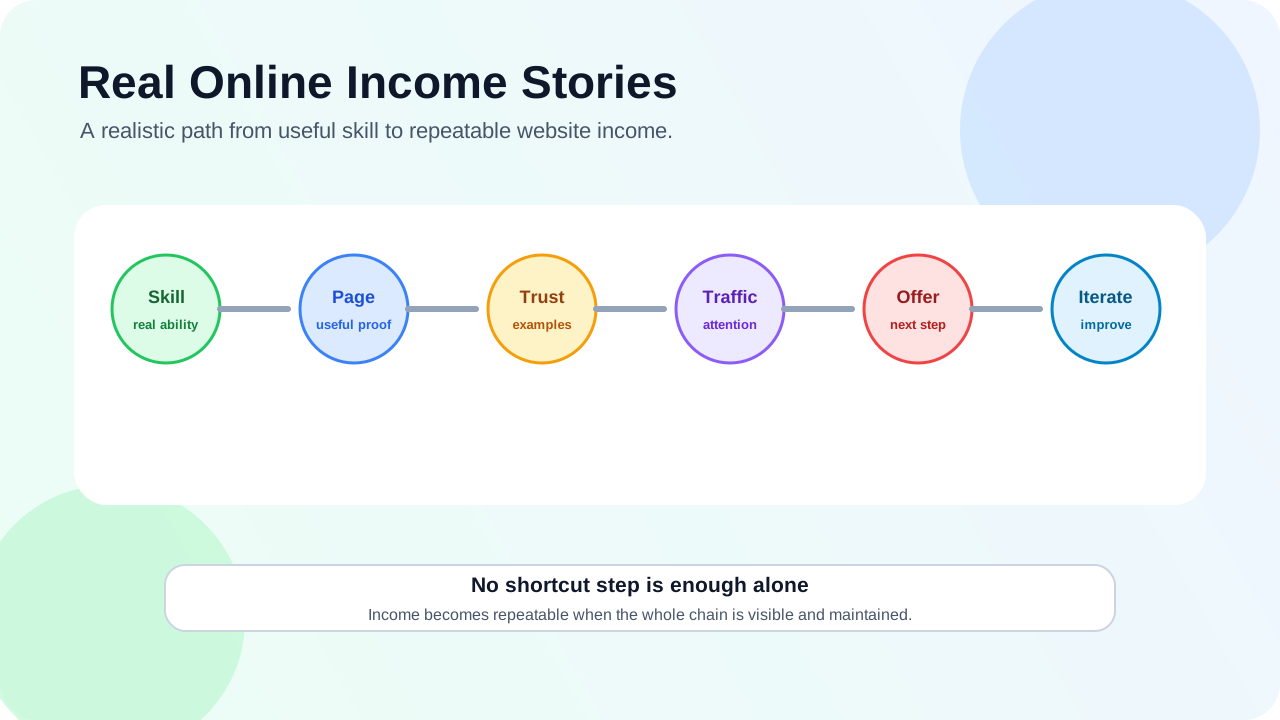
Everyone wants to know how to make money online, but most advice skips the messy, real part: the mistakes, the false starts, and the small wins that actually work. This post shares stories from real people who went from zero to making money online—no get-rich-quick schemes, just honest experiences.Story 1: Sarah went from $0 to $2,000/month with affiliate content Sarah was a stay-at-home mom who wanted to earn extra money. She started a blog about budget-friendly baby gear. What worked:She wrote detailed comparison posts about baby products she actually used She focused on specific problems: "best car seat for small cars," "affordable cloth diapers" She added affiliate links only after building trust with helpful contentHer mistakes:First month: She tried to review 10 products in one post—too broad, no depth She forgot disclosure at first (fixed after learning about FTC rules)Her advice: "Start with what you know. I wrote about baby gear because I was living it. Readers could tell I wasn't just copying descriptions." Story 2: Mike made $1,500/month fixing WordPress sites Mike was a high school teacher who learned basic WordPress to build his own site. He started helping friends fix their sites for free, then turned it into a business. What worked:He created a simple service page: "I fix WordPress problems—fast and affordable" He showed before/after examples on his site He offered a free 15-minute troubleshooting call to build trustHis mistakes:He underpriced at first ($25/hour)—raised to $75 after realizing his time was valuable He didn't set clear boundaries—now he uses a booking system with set packagesHis advice: "You don't need to be an expert. Most small business owners just need someone who speaks their language and solves their problem quickly." Story 3: Lisa earned $3,000/month selling templates Lisa was a graphic designer who created custom Notion templates for her own use. She shared one on Twitter, got requests for more, and started selling them. What worked:She identified a specific pain point: "Notion templates for freelance writers" She offered a free sample template to build an email list She updated templates based on customer feedbackHer mistakes:She tried to make templates for everyone—narrowed to freelance writers after 3 months She didn't have a refund policy at first (added after one customer asked)Her advice: "Build what you need first. If it solves your problem, chances are others need it too." Story 4: Raj built a local lead gen site for plumbers Raj lived in a small city and noticed local plumbers had terrible websites. He built a site that helped homeowners find reliable plumbers—and earned commissions for referrals. What worked:He focused on one city: "Best Plumbers in [City Name]" He wrote helpful content: "How to fix a leaky faucet (and when to call a pro)" He verified plumbers before recommending themHis mistakes:He tried too many cities at once—stuck with one city until it was profitable He didn't track which plumbers converted—added a simple form to track leadsHis advice: "Local is underrated. Big sites ignore small cities. You can be the go-to resource for your area." The common thread in all these stories Every successful person in these stories did three things:Started small - They didn't try to build an empire day one Solved a specific problem - They didn't chase "make money online"—they solved a real pain Built trust first - They helped before asking for money5 lessons from their mistakesDon't try to be everything to everyone - Narrow your focus Charge what you're worth - Underpricing hurts you and devalues your work Set clear boundaries - You're not available 24/7 Learn from feedback - Your first product/service won't be perfect Track what works - You can't improve what you don't measureHow to apply these stories to your journey Use this simple framework:Pick one problem - What do you see people struggling with that you can help solve? Choose one method - Affiliate, services, digital products, or local leads? Build the smallest version - One page, one offer, one way to help Launch and learn - Get feedback, improve, repeatThe #1 mistake beginners make (and how to avoid it) The biggest mistake is waiting for everything to be perfect. These successful people all launched with imperfect websites, imperfect products, and imperfect processes. Instead of: "I need a perfect website before I start" Try: "I'll launch with one page that explains what I do and how to contact me" Final recommendation Making money online isn't about finding a secret formula. It's about helping someone solve a problem, doing it well, and being honest about it. Start with what you know, focus on one audience, and don't be afraid to start small. The stories above show that regular people can do this—you don't need special skills or huge budgets. If you're ready to take the first step, read How to Start Your First Online Business in 30 Days. For help choosing a monetization path, check out Monetization Paths for Beginners. FAQ Do I need technical skills to make money online? No. Sarah had no technical skills—she used a website builder. Mike learned WordPress as he went. Focus on solving a problem, not mastering technology. How long does it take to make the first dollar? It varies. Mike made his first dollar in 2 weeks (a friend paid him $50 to fix her site). Sarah took 3 months to get her first affiliate sale. Be patient—trust takes time. Do I need to spend money to start? You can start for free with tools like Canva, Google Docs, and free website builders. You'll probably want a domain and hosting eventually ($10-$30/month), but you can validate first without it. What if I don't have any ideas? Look at your own life. What problems have you solved recently? What tools do you use that others might struggle with? That's your starting point. Is it really possible to make a living online? Yes, but it takes time and consistency. Most people start as a side hustle, then grow it. The stories above started small and scaled up over 6-12 months.
- OppMint Team
- 06 Jun, 2026
Free Ways to Make Money Online That Can Grow Into a Website
Free ways to make money online sound attractive because they remove the fear of wasting money. That is useful for beginners, but it can also create the wrong expectation. Free does not mean effortless. It usually means you pay with time, learning, consistency, and slower growth. The best free online income paths are the ones that let you test a real audience problem before spending money on tools, ads, complex software, or a full website build.What "free" really means A free path usually means you can start without a large upfront budget. You may still need:a device and internet connection; time to create content or deliver work; a free profile, marketplace account, or simple page; basic writing, research, editing, or communication skills; patience while you learn what people actually want.If a method says you can make money instantly with no skill, no audience, no offer, and no trust, be careful. Real online income still needs value exchange. The goal is not to stay free forever. The goal is to use free methods to validate a direction before paying for a domain, hosting, tools, or a larger content plan. 1. Offer a simple service from home Services are one of the most realistic free ways to make money online because you can start with skills you already have. Examples include:proofreading; simple website updates; blog formatting; social post scheduling; spreadsheet cleanup; basic SEO checks; Canva design support; customer support help; research assistance.You do not need a full website on day one. You can start with a clear offer, a short portfolio, and direct outreach. But once people show interest, a simple website helps you look more trustworthy. Your first site can explain:who you help; what problem you solve; what is included; what results are realistic; how someone can contact you.If you want this path, use free outreach first, then move serious buyers to a focused service page later. 2. Start helpful content before monetizing You can begin publishing helpful content for free on social platforms, newsletters, communities, or free publishing tools. The goal is to test whether your topic has real audience interest. Good beginner topics answer practical questions:how to choose a beginner website builder; how to compare hosting plans; how to organize a niche blog; how to avoid common affiliate mistakes; how to create a basic SEO checklist.Google's guidance on helpful content is a useful filter: content should be created for people first and provide a satisfying experience. That matters even before you own a website, because weak content does not become strong just because it is published on your own domain later. After you see which topics attract questions, clicks, or saves, you can turn the best ideas into website articles. 3. Use affiliate marketing carefully Affiliate marketing can be started with little upfront cost, but it should not be treated as free money. You need:a useful recommendation; a relevant audience; honest comparisons; clear disclosure; enough trust for someone to act.The FTC expects creators and publishers to clearly disclose material connections. If you may earn from a recommendation, readers should not have to guess. For beginners, the best affiliate content is usually not "buy this now." It is educational content that helps someone make a decision:"Which beginner hosting type fits a small blog?" "Website builder vs WordPress for a service business" "Free tool vs paid tool: when to upgrade" "What to check before joining an affiliate program"You can test the content angle for free, then later build a website around the topics that deserve permanent search-friendly pages. 4. Build a free portfolio first If you want freelance or consulting income, a free portfolio can help you start before you pay for a website. Your first version can include:a short bio; three sample projects; one clear offer; a contact method; one helpful article or guide.This is especially useful for writing, design, web setup, automation, SEO support, or virtual assistant work. Once you get your first proof, move the portfolio to your own website. A dedicated site gives you more control over layout, SEO, contact forms, service pages, and case studies. 5. Create a small digital resource You can create a digital resource with free tools before investing in a larger product. Examples:a checklist; a spreadsheet template; a mini guide; a content calendar; a website planning worksheet; a niche research file; a simple prompt pack.The danger is building too much too early. A better path is to answer the same question several times for free, then package the answer into a resource people can use faster. A website becomes useful when you need a landing page, FAQ, update log, support page, or a place to collect email interest. 6. Join marketplaces without depending on them forever Marketplaces can help you start for free because they already have buyers. But they also control the rules, visibility, fees, and competition. Use them as a testing ground, not your only business home. A simple approach:Create a narrow service offer. Complete a few small projects. Record the questions buyers ask. Turn those questions into helpful website content. Use your website to build trust outside the marketplace.This keeps you from depending entirely on one platform. 7. Do market research before spending money Before paying for a domain, hosting, ads, or tools, research whether the idea has demand. The SBA's market research guidance recommends understanding demand, market size, economic indicators, location, saturation, and pricing. For a beginner online project, this becomes a simple checklist:Are people already asking about this problem? Are there existing tools, services, or products in the space? Can you explain the problem better than generic content does? Are people willing to pay for help, shortcuts, or clarity? Can the topic support many helpful pages?Free research prevents expensive guessing. When should you pay for a website? You do not need to pay for everything immediately. But a website becomes worth it when you have one of these signals:Signal Why a website helpsPeople ask the same questions Turn answers into searchable articles.You have a clear service Create a trust-building service page.Affiliate content needs structure Organize comparisons, disclosures, and internal links.You have a small product Build a landing page and FAQ.You want search traffic Publish evergreen content on your own domain.You need credibility Show proof, process, and contact details in one place.WordPress's own beginner documentation starts with reading, planning, installing, and setting up in stages. That is the right mindset: plan first, then build only what you need. Costs to avoid at the beginning The SBA also recommends calculating startup costs before launching. For online beginners, that means avoiding random spending on:premium themes before you know your offer; expensive SEO tools before you publish content; paid ads before your page converts; multiple domains for untested ideas; advanced automation before you have a repeatable process; courses that promise easy income without a clear business model.Spend only after a cost supports a tested next step. A free-to-low-cost starter path Use this sequence if you want to start carefully:Pick one audience problem. Research existing demand and competitors. Publish helpful content or offer a small service for free or low cost. Watch which questions repeat. Create a simple offer, affiliate article, or digital resource. Build a small website when you need trust, SEO, or a stable home. Add paid tools only when they save time or increase quality.This path is slower than hype, but it is much safer. Final recommendation Free ways to make money online are best used as validation paths. They help you test a skill, audience, topic, offer, or content angle before you spend money. If you are just starting, do not ask "How can I make money online for free forever?" Ask "What can I test for free this week that could become a real website-backed income path later?" Start with Start Here if you need a guided route. If you already know you want to build around content, continue with Website Ideas or SEO Traffic to choose a topic that can grow. FAQ What are free ways to make money online for beginners? Beginner-friendly options include simple services, helpful content, affiliate education, free portfolios, small digital resources, and marketplace testing. The best choice depends on your skills and audience. Can I make money online without a website? Yes, especially with services, marketplaces, social content, or direct outreach. But a website becomes useful when you need trust, SEO traffic, structured content, or a stable place for offers. Is affiliate marketing free to start? It can be low-cost, but it still requires useful content, disclosure, audience trust, and consistent publishing. Free start does not mean easy income. When should I stop using only free tools? Upgrade when a paid tool directly supports a validated need, such as a domain for credibility, hosting for SEO content, email software for subscribers, or a builder that saves setup time. What is the safest first step? Choose one audience problem and test it with free content or a small service offer. Do not buy tools or build a large site until you see real interest.
- OppMint Team
- 06 Jun, 2026
Make Money Online Website Types and Revenue Models
A make money online website is not one specific type of site. It can be a blog, service site, affiliate site, lead generation page, digital product store, niche resource, or a mix of several models. The important question is not "What is the best site to make money online?" The better question is: what type of website matches your skills, audience, traffic plan, and monetization path? This guide maps the main website types to realistic revenue models so you can choose a beginner-friendly direction. If you want the broader reality check first, compare these models with actual ways to make money online before choosing a site type.What a money-making website actually does A website earns money when it helps a visitor take a valuable next step. That next step might be:clicking a relevant affiliate recommendation; reading pages that support display ad revenue; booking a service; joining an email list; buying a digital product; requesting a quote; comparing tools before purchase; trusting you enough to contact you.A website is the system. The revenue model is the mechanism. You need both. 1. Affiliate content website An affiliate website helps readers compare products, tools, services, or solutions. If a reader buys through your affiliate link, you may earn a commission. Common page types include:best-of lists; alternatives pages; comparison pages; tutorials that mention tools naturally; buying guides; setup checklists; niche resource hubs.This model fits beginners who can explain decisions honestly. It does not fit people who only want to paste links into thin content. If this path fits your skills, read How to Build an Affiliate Website before planning the first content cluster. You also need disclosure. The FTC expects clear disclosure when there is a material connection, including affiliate compensation. That disclosure should be easy to notice, not hidden in a footer nobody reads. Best fit: software, hosting, website builders, creator tools, niche gear, business tools, and products where buyers need help choosing. If the site will focus on builders, the affiliate marketing website builder guide can help narrow the platform angle. 2. Content blog with ads A blog can make money with display ads, but ads usually require consistent traffic. Google AdSense describes the model as publishers making ad spaces available, advertisers bidding to appear, and revenue varying based on site content and visitors. That means ad income is usually not the fastest path for a new website. It works better when the site can publish a lot of useful content and attract ongoing search traffic. Good ad-supported sites often have:many evergreen articles; clear categories; strong internal links; broad enough search demand; clean page experience; content that keeps visitors reading.Best fit: informational niches with enough topic depth, such as personal finance education, home projects, software tutorials, beginner business guides, hobbies, and practical how-to content. 3. Service website A service website sells your time, expertise, or process. Examples:website setup; SEO audit; writing or editing; automation setup; analytics setup; design support; consulting; virtual assistance.This is often the most realistic beginner model because you do not need huge traffic. A small number of qualified visitors can matter if the offer is clear. A strong service website includes:a clear audience; a specific outcome; what is included; who the service is not for; examples or process; a contact path; helpful articles that show expertise.Best fit: people with a practical skill who want online income before building a large content engine. 4. Digital product website A digital product website sells downloadable or online resources. Examples include:templates; spreadsheets; mini-courses; checklists; paid guides; research files; Notion systems; prompt packs; small software tools.This model works best when the product solves a repeatable problem. Beginners often fail because they build the product before proving the problem exists. A better path is to publish helpful free content first, notice repeated questions, and then create a paid shortcut. Best fit: creators, operators, educators, consultants, and niche experts who can package a process. 5. Lead generation website A lead generation website collects qualified interest and sends it to a provider, partner, or your own sales process. Examples:quote request pages; local service comparison sites; niche consultation pages; B2B software setup inquiries; professional service guides; booking pages for specialized help.This model requires trust. If you collect personal information, you need clear expectations about what happens next. Do not ask for more information than you need. Best fit: niches where one qualified lead is valuable and the visitor has strong intent. 6. Tool or calculator website A tool website gives visitors a free utility, then monetizes through ads, affiliate links, services, email, sponsorships, or paid upgrades. Examples:cost calculators; comparison tools; audit tools; planners; generators; checkers; templates with interactive inputs.This model can be powerful because tools create repeat visits and useful internal links. But tools also take more work to build and maintain. Best fit: technical founders, marketers with a clear workflow problem, or service providers who can turn a repeatable task into a useful free tool. 7. Mixed revenue niche website Many successful small sites do not rely on one model forever. They start with one simple path and later add others. For example:A beginner hosting guide starts with affiliate content. The site adds SEO tutorials to grow traffic. Popular pages collect email subscribers. The owner adds a website setup service. Later, they sell a checklist or mini-course.This layered model is often stronger than depending only on ads or only on affiliate links. The key is sequencing. Do not add five monetization methods before the site has a clear audience. How to match website type to your situation Use this table:Your starting point Best website type Main revenue modelYou understand product decisions Affiliate content site CommissionsYou can publish lots of useful articles Content blog Ads, affiliate, emailYou have a practical skill Service site Client workYou know a repeatable process Digital product site Templates or guidesYou know a high-intent niche Lead generation site Leads or consultationsYou can build simple utilities Tool site Ads, affiliate, servicesYou want long-term optionality Niche authority site Mixed revenueThere is no universal best website to make money online. The best site is the one you can build consistently and improve with real feedback. If budget is the main constraint, compare free ways to make money online before paying for tools or hosting. What every income website needs No matter which model you choose, every serious website needs a few basics. Helpful content Google's helpful content guidance is a good standard: content should be people-first, reliable, and useful. If the page exists only to rank or monetize, it is unlikely to build long-term trust. A clear business model The SBA's business plan guidance is useful even for small websites because it pushes you to define what you sell, who you serve, how you reach them, and how the business makes money. You do not need a 40-page plan, but you do need a clear model. Simple site structure WordPress's beginner documentation recommends reading, planning, installing, and setting up in stages. That applies to any platform: plan the pages before you overbuild. A simple structure might be:homepage; topic or category page; articles; about page; contact or offer page; privacy policy; disclosure if you use affiliate links.Trust signals Trust can come from clear writing, honest tradeoffs, real examples, transparent disclosures, useful internal links, and a clean layout. A beginner site does not need to look expensive. It needs to feel clear and honest. A beginner build path If you are not sure which model to pick, start with this:Choose one narrow audience problem. Pick one primary revenue model. Create one category hub. Publish five decision-focused articles. Add one clear next step. Review which pages get attention. Add a second monetization path only after the first one makes sense.For many beginners, the best starting combination is either:service site plus helpful articles; or affiliate content site plus useful comparison pages.Ads can come later when traffic is real. Final recommendation A make money online website should not be built around vague income dreams. It should be built around a specific audience, a useful content angle, and a revenue model that matches visitor intent. If you want a practical next step, choose one of these:build a service site if you already have a skill; build an affiliate content site if you can help people compare options; build a niche content site if you can publish deeply for months; build a digital product site after you validate repeated questions.To plan your first structure, start with Build Websites. If you are still choosing the idea, browse Website Ideas and then come back to Make Money Online to match the idea with a revenue model. FAQ What is the best website to make money online? There is no single best website type. Affiliate sites, service sites, niche blogs, tool sites, digital product sites, and lead generation sites can all work when the audience, content, and revenue model fit together. Can a blog still make money online? Yes, but a blog usually needs consistent helpful content and enough traffic. Ads often require more traffic, while affiliate content or services can work with more targeted visitors. What website model is easiest for beginners? A service website is often easiest because it can earn with fewer visitors. Affiliate content can also work if you understand the niche and write honest decision-support content. Do I need WordPress to make money online? No. WordPress is one common option, but website builders, static sites, hosted platforms, and custom sites can also work. Choose based on your skill level, content plan, ownership needs, and budget. Should I add ads, affiliate links, or products first? Start with the monetization path that matches visitor intent. If readers compare products, affiliate links may fit. If they need help, a service CTA may fit. If they only read informational content at scale, ads may fit later.