Service Website Case Study Page Guide: Turn Small Wins Into Honest Proof
-
 OppMint Team
 - 29 Jun, 2026

A service website case study page does not need to show a dramatic transformation or a huge revenue number. For many small service providers, the best case studies are honest proof that you can diagnose a problem, work within constraints, make a clear recommendation, and help a client move forward.
Case studies matter because service buyers are not only buying deliverables. They are buying judgment, reliability, communication, and confidence that the next conversation is worth their time.
Why service websites need case study pages
A service page explains what you offer. A case study shows what the work looks like in practice.
| Visitor question | How a case study helps |
|---|---|
| “Have they solved a problem like mine?” | Shows a specific context |
| “Do they understand constraints?” | Explains budget, time, platform, or scope limits |
| “What actually happens after I inquire?” | Shows the process |
| “Can I trust the result?” | Gives evidence without overpromising |
| “Is this service a fit for me?” | Helps visitors compare their situation |
This connects directly to service website trust signals. Testimonials are useful, but case studies give visitors a clearer story.
What counts as a case study when you are small
You do not need enterprise clients to write useful case studies. You need a specific problem and a clear before/after decision.
Valid case study formats include:
| Format | Best use |
|---|---|
| Full case study | Larger project with measurable outcomes |
| Case note | Small engagement or audit result |
| Before/after page review | Website, pricing page, form, or content improvement |
| Process example | Shows how you diagnose and prioritize work |
| Anonymous example | Useful when client details are private |
| Sample deliverable walkthrough | Good before you have many clients |
If you do not have permission to share client names, write anonymized case notes. Just make the limitation clear.
The case study structure
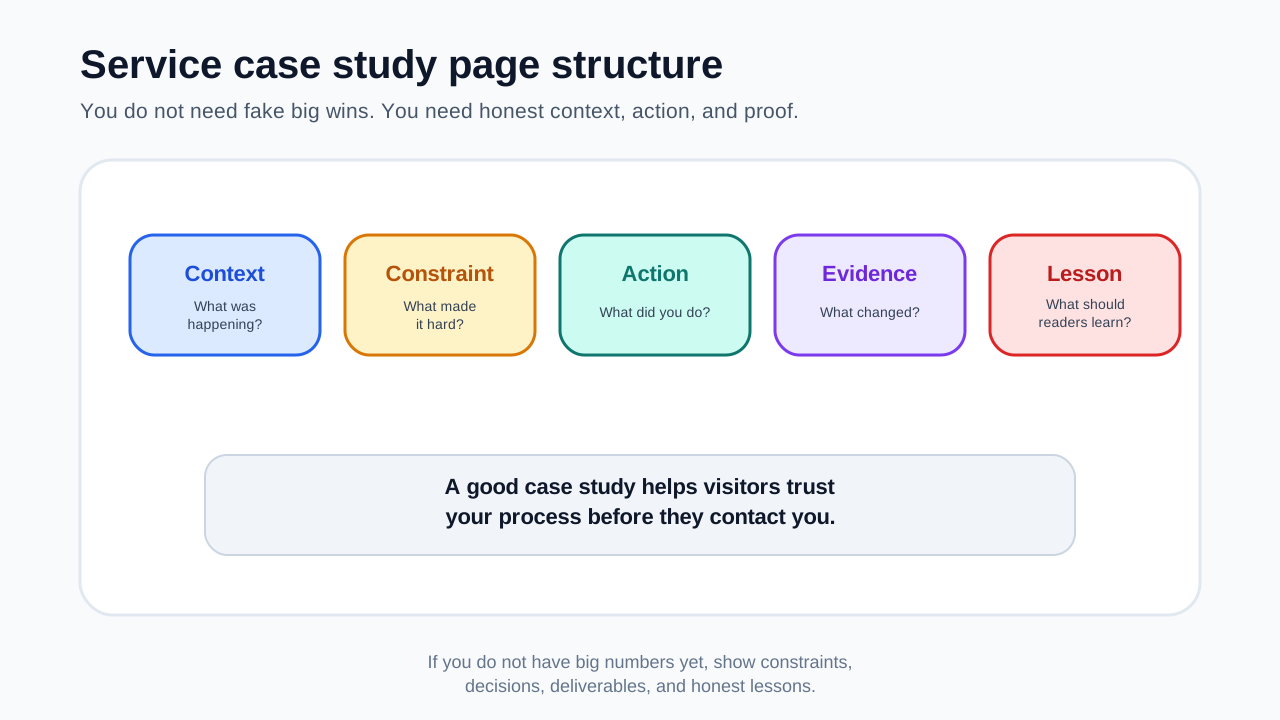
Use this structure for most service websites:
| Section | What to include | What to avoid |
|---|---|---|
| Context | Who the client was and what they needed | Vague “a client came to us” phrasing |
| Constraint | Budget, time, platform, traffic, team size, data gaps | Pretending the project had no limits |
| Diagnosis | What was actually wrong | Listing every minor issue |
| Action | What you changed, recommended, or delivered | Making the process sound magical |
| Evidence | What improved or became clearer | Fake numbers or unsupported claims |
| Lesson | What similar visitors should learn | Generic “contact us” ending |
| Next step | How the reader can get similar help | Hard pitch too early |
The goal is not to impress everyone. It is to help a good-fit visitor recognize themselves in the situation.
How to write proof without fake claims
Many small service providers avoid case studies because they do not have clean metrics. That is fine. You can still show proof.
Use proof types like:
- screenshot of a deliverable with private details removed;
- before/after structure of a page;
- checklist of issues found;
- decision tree used during the engagement;
- client quote about clarity or process;
- timeline and deliverables completed;
- what the client could do after the work.
Avoid:
- invented revenue numbers;
- “10x leads” without tracking;
- fake testimonials;
- ranking claims you cannot verify;
- screenshots that reveal private data;
- implying your process guarantees the same result for everyone.
If you only improved clarity, say that. Clarity is valuable when it helps the client make a better decision.
Case studies for service website pages
A case study should connect to the funnel around it.
| Funnel location | Case study angle |
|---|---|
| Homepage | One short proof block showing who you help |
| Service page | Example matching that service |
| Pricing page | Scope and deliverable examples |
| Contact page | Reassurance about process and response |
| Follow-up email | A short story before inviting a call |
| Blog post | A teaching case note tied to the topic |
If someone is reading your service website pricing page, a case study should explain scope and value. If they are filling out your contact form, it should reduce anxiety about the next step.
Case study template
You can copy this structure:
Title:
[Client type] improved [problem area] by changing [specific lever]

1. Context
- Who was the client?
- What were they trying to improve?
- What did the website or process look like before?

2. Constraint
- What limits mattered?
- Budget, time, platform, team, traffic, data, approvals?

3. Diagnosis
- What was the core issue?
- What was not the issue?

4. Action
- What did you do or recommend?
- What deliverables did the client receive?

5. Evidence
- What changed?
- What proof can be shown safely?
- What remains uncertain?

6. Lesson
- What should similar service providers learn?

7. Next step
- Who is this service a fit for?
- What should the visitor do next?
This template works even when the result is not a huge success story.
Example: small service website case note
Here is a simple example structure:
| Section | Example |
|---|---|
| Context | A local consultant had traffic but few qualified inquiries |
| Constraint | No budget for a full redesign; only service page and form could change |
| Diagnosis | The page described services, but did not explain who was a fit |
| Action | Rewrote offer section, added pricing context, simplified form questions |
| Evidence | Visitors could self-filter before contacting; fewer vague inquiries |
| Lesson | Trust signals and qualification often matter before design polish |
Notice that this does not claim guaranteed revenue. It shows a decision and a practical improvement.
Where to place case studies
Do not hide all case studies on one page if nobody visits that page. Reuse them in context.
| Placement | Format |
|---|---|
| Service page | Short case block with link to full story |
| Pricing page | Scope example and deliverables |
| Trust section | Quote + context + result |
| Blog article | Teaching case note |
| Lead magnet follow-up | Short story tied to the resource |
| Proposal | Relevant case note matched to prospect |
If you already use a lead magnet strategy, case studies can support the follow-up sequence by showing what happens after someone applies the advice.
Mistakes to avoid
- Writing case studies that are too vague to be useful
- Starting with your company instead of the client problem
- Making claims without proof
- Hiding constraints because they sound messy
- Sharing private client data without permission
- Using only testimonials and no context
- Ending every case study with a hard pitch
- Writing one giant case study page and never linking to it
The best case studies are specific, honest, and easy to connect to a visitor’s current problem.
Related guides
- Service Website Trust Signals
- Service Website Pricing Page Guide
- Service Website Contact Form Questions
- Service Website Follow-Up Sequence
- Content Website Service Lead Funnel
FAQ
Do I need client permission to publish a case study?
If the client is identifiable, yes. If you do not have permission, anonymize the story and remove private details. Do not imply endorsement when none exists.
What if I do not have measurable results?
Use process proof. Show the diagnosis, recommendation, deliverable, decision made, or clarity gained. Be honest about what was and was not measured.
How long should a case study be?
A short case note can be 400-700 words. A full case study can be longer. The length matters less than whether it answers context, constraint, action, evidence, and lesson.
Should case studies include pricing?
They can include pricing context or scope ranges if that helps visitors understand fit. Do not reveal private commercial terms without permission.
Final take
A service website case study page should make trust concrete. Show the situation, the constraint, the decision, the work, the evidence, and the lesson. If you do not have big numbers yet, do not fake them. Turn small wins into honest proof.