Service Website Contact Form Questions: Qualify Leads Without Adding Friction
-
 OppMint Team
 - 24 Jun, 2026
A service website contact form should not ask everything. It should ask just enough to help both sides decide whether a real conversation makes sense.
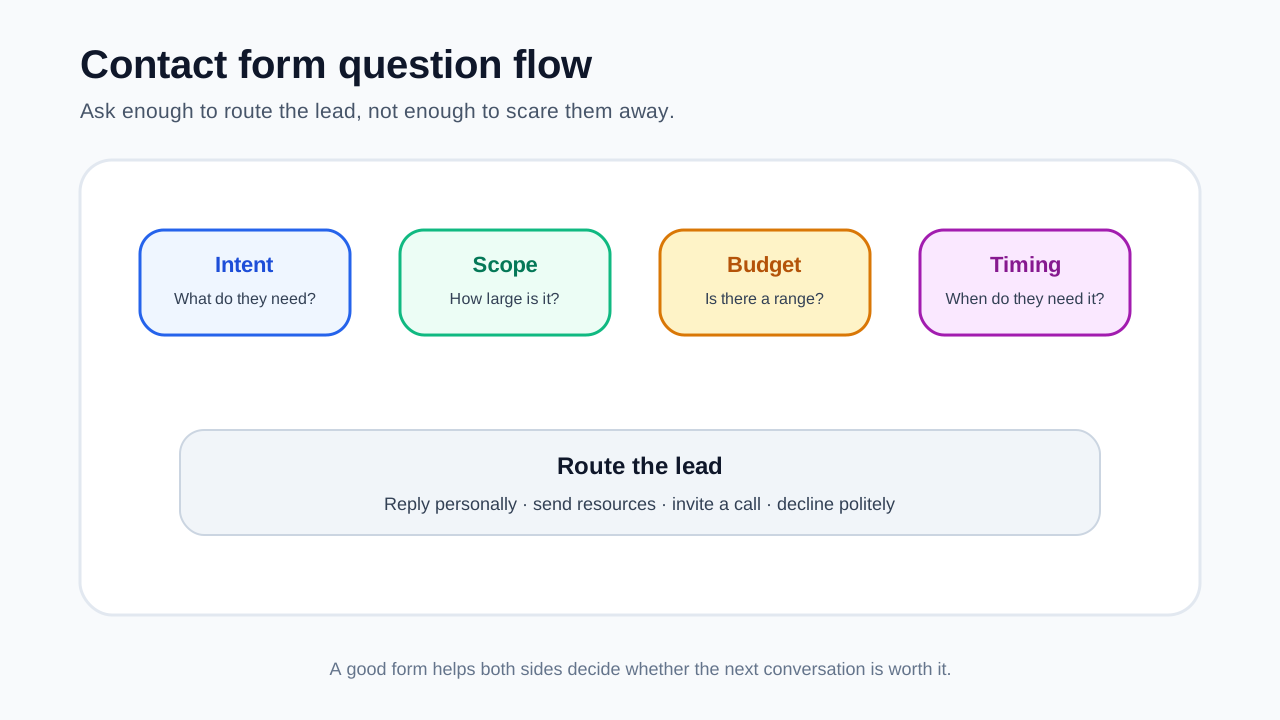
Too few questions create bad-fit leads. Too many questions reduce submissions. The best contact form sits in the middle: it collects intent, scope, timing, and fit without turning the form into a job application.
Why contact forms fail
Most service website forms fail for one of two reasons.
| Problem | What happens |
|---|---|
| Too short | You get vague messages like “I need help with my website” |
| Too long | Good visitors abandon the form before submitting |
The goal is not to collect maximum information. The goal is to route the lead correctly.
The minimum fields
Start with the basics:
- name;
- email;
- website URL if relevant;
- project type;
- short message.
For many small service websites, this is enough to start. Add qualification fields only when they improve routing.
Qualification questions that help
Use questions that affect how you respond.
| Question | Why it helps |
|---|---|
| What type of help do you need? | Routes the lead to the right service |
| What is your website URL? | Lets you review context before replying |
| What is your timeline? | Separates urgent from exploratory leads |
| Do you have a budget range? | Reduces mismatch |
| What have you tried already? | Shows problem maturity |
Avoid questions that feel intrusive before trust is built.
Budget fields: yes, but carefully
A budget question can save time, but it should not feel like a gate.
Better wording:
What budget range should we keep in mind?Options can be broad:
- Under $500
- $500-$1,500
- $1,500-$5,000
- $5,000+
- Not sure yet
The “not sure yet” option matters. Some good leads need guidance before they can estimate budget.
Questions not to ask too early
Avoid asking for:
- full company revenue;
- personal address;
- too many technical details;
- login credentials;
- long strategy explanations;
- files before the first reply;
- exact project scope if the visitor is still learning.
If you need those later, ask after the first conversation.
Match form questions to page intent
Not every page needs the same form.
| Page type | Form style |
|---|---|
| Blog post | Light form or lead magnet |
| Pricing page | Budget and service fit |
| Service page | Project type and timeline |
| Case study | Similar project interest |
| Contact page | Full inquiry form |
If visitors come from Service Website Pricing Page Guide, budget range is useful. If they come from Service Website Lead Magnet Strategy, a lighter form may convert better.
Routing leads after submission
A form is only useful if submissions go somewhere actionable.
Simple routing:
| Lead type | Next step |
|---|---|
| Good fit, urgent | Personal reply or call invite |
| Good fit, not urgent | Send planning resource |
| Unsure fit | Ask one clarifying question |
| Bad fit | Politely decline or send self-serve resource |
| Spam | Filter and ignore |
Do not send everyone the same automated sales email.
Contact form checklist
- The form has a clear purpose.
- Required fields are minimal.
- Budget field has “not sure yet.”
- Website URL is optional unless necessary.
- The success message says what happens next.
- Privacy policy is linked near the form.
- Submissions route to a real inbox or CRM.
- Spam filtering is enabled.
- You review form completion quality monthly.
Common mistakes
Asking too much too soon
If a visitor has to answer 15 questions before trust exists, they may leave.
Asking nothing useful
If every lead says “I need help,” your form is not qualifying anyone.
No follow-up path
If the form submits but nobody owns the reply, the page is not a lead funnel.
Related guides
- Service Website Pricing Page Guide
- Service Website Lead Magnet Strategy
- Service Website Lead Generation
- Content Website Service Lead Funnel
- How to Build a Website for a Small Business
FAQ
How many fields should a service website contact form have?
Most service websites should start with five to seven fields. Add more only if the answer changes how you respond.
Should I ask for budget on the contact form?
Yes, if budget mismatch is common. Use ranges and include “not sure yet” so early-stage leads do not feel blocked.
Should I use a lead magnet instead of a contact form?
Use both. Lead magnets help visitors who are not ready to contact you; contact forms help people who are closer to buying.
Final take
A good service website contact form is not about collecting every detail. It is about asking the few questions that help you qualify, route, and respond to leads faster without creating unnecessary friction.