Internal Linking Tool: What to Check Before You Add More Links
-
 OppMint Team
 - 06 Jun, 2026
An internal linking tool can help you find pages that need better connections, but the tool should support your strategy instead of replacing judgment.
For a small website, the best internal linking tool is the one that helps you answer simple questions: which pages are isolated, which links are broken, which anchors are vague, and which important pages need stronger paths.
What an internal linking tool should help with
A useful internal linking tool should help you check:
- orphan pages;
- broken internal links;
- redirected internal links;
- pages with too few incoming links;
- pages with too many outgoing links;
- link depth from main entry pages;
- repeated or vague anchor text;
- topic cluster connections;
- links to important next-step pages.
The output should help you decide what to change, not just give you a long list of URLs.
Start with the problem, not the software
Before choosing a tool, define what you need to improve.
Common problems include:
| Problem | What to look for |
|---|---|
| New pages are hard to find | Pages with no incoming links |
| Important guides are weak | Few relevant links from related pages |
| Users stop after one page | No clear next-step links |
| Search engines miss pages | Crawlable link paths are missing |
| Site feels cluttered | Too many unrelated links |
| Old links are unreliable | Broken or redirected destinations |
A tool is useful when it makes these problems visible.
Check orphan pages first
An orphan page has no internal links pointing to it.
An internal linking tool should help you find pages that are published but not connected from articles, categories, menus, or other crawlable paths.
Fix orphan pages by linking from:
- related articles;
- relevant category pages;
- main guides;
- checklists;
- tool pages;
- service pages when appropriate.
Do not add a random link just to remove the orphan status. The link should make sense for the reader.
Check link depth
Link depth shows how many clicks it takes to reach a page from a key entry point.
For small websites, important pages should not be buried. A tool can help identify pages that are only reachable after several clicks or through weak paths.
Ask:
- Can a visitor find this page from the homepage or category structure?
- Does a related article link to it naturally?
- Does the page belong in a topic cluster?
- Is it important enough to deserve a shorter path?
Not every page needs to be one click away, but valuable pages should be reachable.
Review anchor text
Anchor text is the visible text used for a link.
A tool can help you find repeated vague anchors such as:
- click here;
- read more;
- this page;
- learn more;
- full guide.
Better anchors describe the destination:
- internal linking strategy;
- new site SEO checklist;
- website SEO audit;
- content SEO guide;
- beginner website setup.
Do not force exact-match keywords everywhere. The anchor should fit the sentence.
Find broken and redirected links
Broken internal links create bad paths for users and search engines.
An internal linking tool should flag links that lead to:
- 404 pages;
- redirect chains;
- deleted pages;
- old URLs;
- pages blocked from discovery;
- pages that no longer match the anchor context.
Fixing broken links is often one of the fastest internal linking improvements because it restores paths that were supposed to exist.
Check topic cluster coverage
A tool should help you see whether related pages are actually connected.
For example, a content SEO page may need natural links to:
- blog content strategy;
- on-page SEO checklist;
- internal linking best practices;
- website SEO audit;
- organic traffic growth.
If those pages exist but do not link to each other where relevant, the cluster may feel fragmented.
Look at incoming links to priority pages
Not all pages need the same number of internal links.
Priority pages usually deserve more relevant incoming links because they support important reader paths.
These may include:
- main guides;
- category pages;
- tool pages;
- service pages;
- checklists;
- monetization pages;
- articles that answer key beginner questions.
A tool can show whether these pages are well-connected or isolated.
Avoid automatic link stuffing
Some tools suggest many internal links automatically. Use those suggestions carefully.
Avoid adding links when:
- the destination is unrelated;
- the anchor feels unnatural;
- the paragraph already has enough links;
- the link interrupts the reader;
- the link only exists to repeat a keyword;
- the destination is a poor next step.
Internal links should improve the page. They should not make every paragraph look like a directory.
Combine tool data with manual review
Tool reports are useful, but they do not understand every reader journey.
After a tool finds opportunities, manually check:
- whether the link belongs in that section;
- whether the destination answers the next question;
- whether the anchor is clear;
- whether the page already has enough links;
- whether a better page should be linked instead.
Good internal linking is part data and part editorial judgment.
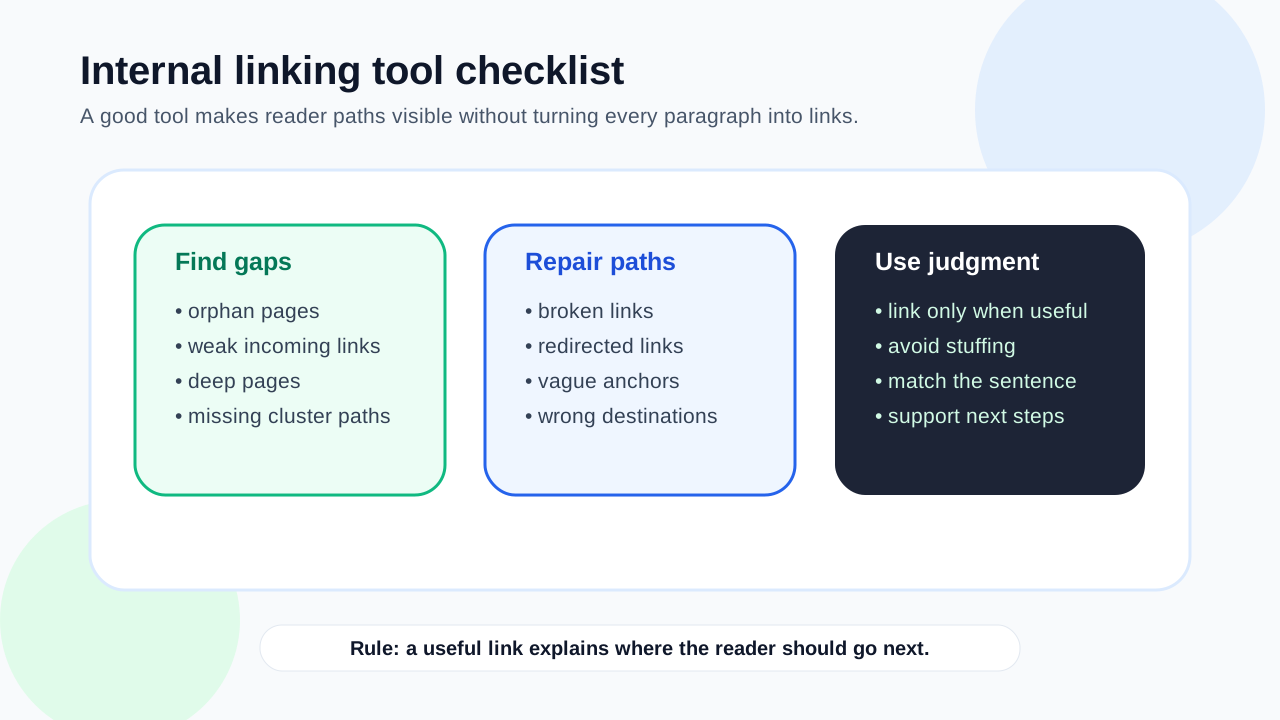
Internal linking tool checklist
Use this checklist when reviewing a report:
| Tool output | What to do next |
|---|---|
| Orphan pages | Add relevant incoming links |
| Broken links | Replace or remove bad destinations |
| Redirected links | Update to the final URL when useful |
| Deep pages | Add better paths from categories or guides |
| Weak anchors | Rewrite anchor text naturally |
| Important pages with few links | Link from related high-context pages |
| Too many links | Remove low-value or unrelated links |
| Cluster gaps | Connect supporting pages to each other |
This turns tool data into practical site improvement.
When a simple spreadsheet is enough
A small website may not need a complex tool at first.
You can start with a spreadsheet that tracks:
- page URL;
- page topic;
- target keyword;
- category;
- priority level;
- incoming internal links;
- outgoing internal links;
- next update needed.
As the site grows, a crawler or SEO tool can make the process faster. But the strategy should stay the same.
Common mistakes
Avoid these internal linking tool mistakes:
- trusting every automatic suggestion;
- measuring only link count;
- ignoring reader intent;
- adding links to unrelated money pages;
- fixing orphan pages with random links;
- ignoring broken links after migrations;
- using the same anchor text everywhere;
- never checking whether links are crawlable.
A tool should help you make better decisions, not make all decisions for you.
Final recommendation
Use an internal linking tool to find orphan pages, broken links, weak anchors, link depth problems, and topic cluster gaps. Then review each opportunity manually so every link helps the reader continue to a useful next step.
If you need the strategy behind the report, read Internal Linking Strategy. If you want to check the whole site, start with a Website SEO Audit.
FAQ
What is an internal linking tool?
An internal linking tool helps you analyze links between pages on the same website, including orphan pages, broken links, link depth, anchors, and page connections.
Do I need a paid internal linking tool?
Not always. Small websites can start with manual review, a spreadsheet, Search Console, and simple crawling. Paid tools become more useful as the site grows.
Should I accept every internal link suggestion?
No. Review each suggestion for relevance, anchor quality, reader value, and whether the destination is the right next step.
What should I check first?
Start with orphan pages, broken links, important pages with few incoming links, and pages that are too deep in the site structure.
Can internal linking tools improve SEO?
They can help you find structural problems and opportunities. SEO improvement still depends on useful content, crawlable links, relevant anchors, and a clear site structure.