Internal Linking Strategy for Small Website Growth
-
 OppMint Team
 - 06 Jun, 2026
An internal linking strategy helps a small website turn separate pages into a connected system. It gives visitors a path, helps search engines discover important content, and makes your main topics easier to understand.
For an income website, internal links should do more than connect pages randomly. They should guide readers from beginner questions toward useful guides, tools, audits, or services.
What an internal linking strategy should do
A good internal linking strategy should help you:
- make important pages easy to find;
- connect related articles into topic groups;
- show which pages are broader or more detailed;
- reduce orphan pages;
- help readers choose a next step;
- support SEO without keyword stuffing;
- make future content updates easier.
The goal is not to add as many links as possible. The goal is to create clear paths.
Start with priority pages
Before adding links, decide which pages matter most.
Priority pages may include:
- homepage;
- start-here page;
- main category pages;
- beginner guides;
- service pages;
- tool pages;
- monetization guides;
- articles that answer high-intent questions.
For a small site, every priority page should have several relevant paths pointing to it. If an important page only appears in the menu, it may still be under-connected.
Map topic clusters
Internal linking works best when related content supports a shared topic.
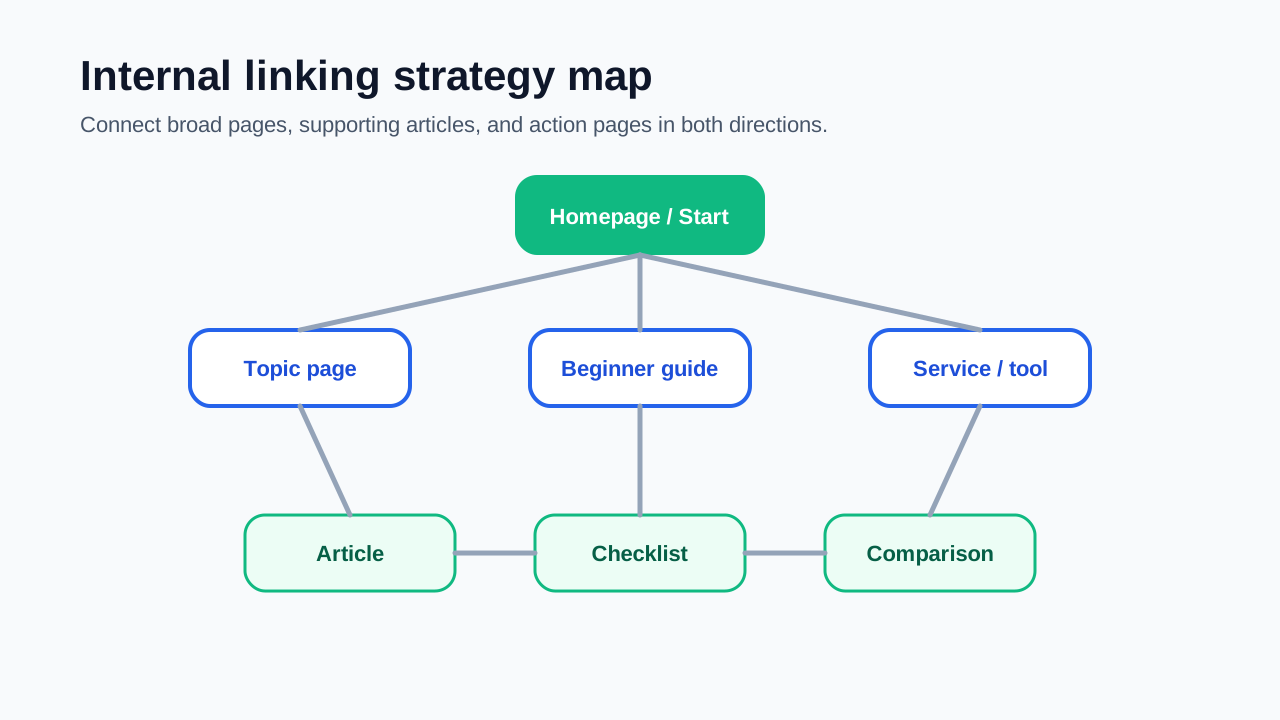
A simple cluster can look like this:
| Page type | Role |
|---|---|
| Main topic page | Explains the broad subject |
| Beginner guide | Helps new readers understand the basics |
| Checklist | Helps readers apply the topic |
| Tool or audit page | Helps readers diagnose or act |
| Monetization page | Connects the topic to business value |
For example, SEO content can connect to content strategy, internal linking, website audits, and organic traffic growth. The pages should support one another instead of competing for the same role.
Build paths by reader intent
A reader’s next step depends on why they came to the page.
Use links differently for each intent:
| Reader intent | Useful link path |
|---|---|
| Beginner learning | Link to a broader guide or start page |
| Problem solving | Link to a checklist or diagnostic page |
| Comparing options | Link to a decision guide or category page |
| Ready to act | Link to a service, tool, or setup guide |
| Continuing a topic | Link to a related supporting article |
This keeps internal links useful instead of mechanical.
Use crawlable, visible links
Search engines need normal links they can discover.
Use links that:
- point to real URLs;
- appear in visible page content;
- use readable anchor text;
- do not require hidden interactions to discover;
- lead to pages that return a successful response.
Important pages should not depend only on scripts, search boxes, or filters to be found.
Choose anchor text with care
Anchor text should describe the destination clearly.
Good anchor text examples:
- on-page SEO checklist;
- blog content strategy;
- website SEO audit;
- beginner website guide;
- internal linking best practices.
Avoid anchors like:
- click here;
- this article;
- read more;
- more info;
- learn more without context.
Natural descriptive anchors help both readers and search engines understand the relationship between pages.
Link from old content to new content
Many sites link new articles to old pages, but forget the reverse.
When you publish a new article, check older related pages and add links where the new article helps the reader. Use internal linking best practices as a quick checklist before adding more links.
This is useful because:
- older pages may already receive traffic;
- new pages need discovery paths;
- topic clusters become stronger over time;
- readers get fresher next steps;
- orphan pages are easier to prevent.
A new page should usually receive at least one relevant incoming link soon after publishing.
Link from new content back to main pages
New articles should also point back to the broader topic.
Use links to:
- the related category page;
- the main guide for the topic;
- a checklist that helps the reader act;
- a service page if the reader may need help;
- another article that answers the next question.
This creates a two-way structure: broad pages help readers find details, and detailed pages help readers return to the bigger path.
Keep depth reasonable
Link depth is the number of clicks needed to reach a page from a main entry point.
For a small website, important pages should usually be reachable through a simple path such as:
- homepage;
- category or topic page;
- article or guide.
If a useful page is buried several clicks deep or only appears in search results, it may need better internal links.
Avoid competing pages
Internal links can reveal when two pages are too similar.
If several pages target almost the same query, ask:
- Which page should be the main answer?
- Which page should support it?
- Should two pages be merged?
- Should one page target a different angle?
- Are anchors pointing to the right page?
A strategy should reduce confusion, not spread the same topic across duplicate pages.
Review important pages regularly
Internal linking is not finished after publication.
Review links when:
- a new article is published;
- a category grows;
- a page becomes important to revenue;
- an old page loses traffic;
- a link points to outdated advice;
- a page is redirected or removed;
- Search Console shows unexpected queries.
This keeps your internal linking strategy aligned with the current site.
Internal linking strategy checklist
Use this checklist when updating a page:
| Check | Question |
|---|---|
| Priority | Does this page support an important topic or business path? |
| Incoming links | Do relevant pages link to it? |
| Outgoing links | Does it point to useful next steps? |
| Anchor text | Are anchors descriptive and natural? |
| Crawlability | Are links visible and accessible? |
| Cluster fit | Does the page support a topic group? |
| Depth | Can users find it without too many clicks? |
| Maintenance | Are old links still accurate? |
This is enough for most small websites and income-site projects.
Common mistakes
Avoid these internal linking strategy mistakes:
- linking every article to every other article;
- using exact-match anchors unnaturally;
- linking only to service pages;
- leaving new articles with no incoming links;
- ignoring old content after publishing;
- creating too many similar pages;
- relying only on navigation menus;
- never checking broken or redirected links.
Internal links should make the site easier to use, not harder to read.
Final recommendation
Build your internal linking strategy around priority pages, topic clusters, reader intent, and useful next steps. Link from context, use descriptive anchors, connect old and new content, and review important pages as the site grows.
If you are improving content structure, read Blog Content Strategy. If you need a practical publishing check, use the On Page SEO Checklist.
FAQ
What is an internal linking strategy?
An internal linking strategy is a plan for connecting related pages on the same website so users and search engines can discover, understand, and navigate your content.
How do internal links help SEO?
They help search engines discover pages, understand topic relationships, and crawl the site more effectively. They also help readers continue to related pages.
Should every page link to every other page?
No. Links should be relevant to the section and useful for the reader. Too many unrelated links can make a page confusing.
How often should I update internal links?
Review links when publishing new content, changing categories, updating important pages, or finding broken links and orphan pages.
What pages should get the most internal links?
Important guides, category pages, tool pages, service pages, and pages that support the site’s main business or growth path should receive relevant internal links.