How to Build an Affiliate Website the Practical Way
-
 OppMint Team
 - 06 Jun, 2026

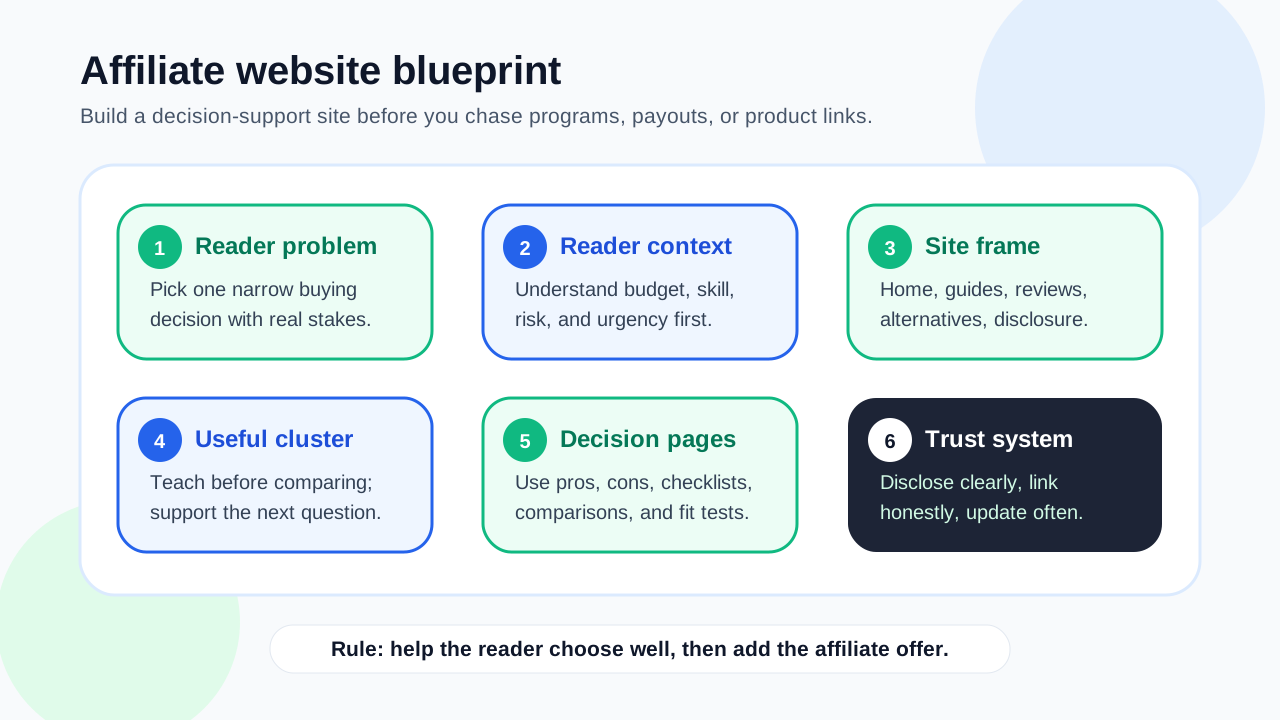
Learning how to build an affiliate website is not the same as learning how to paste product links into blog posts. A real affiliate site helps readers understand options, compare tradeoffs, avoid mistakes, and choose a product or service that fits their situation.
That is why the strongest beginner affiliate websites start with a clear audience problem, not with a commission table.
What an affiliate website actually does
An affiliate website earns when a reader clicks a tracked recommendation and later buys or signs up. But the website only deserves that click if it has helped the reader make a better decision.
A useful affiliate site usually includes:
- educational guides;
- product or tool comparisons;
- alternatives pages;
- setup tutorials;
- buying checklists;
- honest pros and cons;
- clear disclosure;
- internal links between related decisions.
Google’s helpful content guidance is a good filter: if the page exists mainly to attract search traffic or push a link, it is weak. If it helps a real person understand a decision, it has a better foundation.
Step 1: Choose a narrow decision area
Do not start with a huge topic like “software” or “business tools.” Start with one decision area where people already compare options.
Examples:
- beginner web hosting for small blogs;
- website builders for service businesses;
- email marketing tools for creators;
- SEO tools for small websites;
- productivity tools for freelancers;
- home office equipment for remote workers;
- WordPress themes for local businesses.
A narrow decision area is easier to research, easier to explain, and easier to organize into a content cluster.
The SBA’s business plan guidance is useful here because it pushes you to define what you sell, who you serve, and how the business model works. Your affiliate site needs the same clarity.
Step 2: Understand the reader before the product
Before choosing affiliate programs, answer these questions:
- Who is the beginner reader?
- What are they trying to decide?
- What do they already misunderstand?
- What would make them regret a purchase?
- What features matter for their use case?
- What alternatives should they consider?
This keeps your site from becoming a collection of generic product summaries.
A reader does not need you to repeat the vendor’s sales page. They need context.
Step 3: Build the minimum site structure
A beginner affiliate website can start small.
Use this structure:
- Homepage or niche hub.
- About page.
- Disclosure page or visible disclosure statement.
- Three educational articles.
- Two comparison or decision pages.
- One setup guide.
- Internal links between related pages.
WordPress’s beginner documentation recommends planning, installing, setting up, and publishing in stages. That same staged approach works for affiliate sites. Do not build a huge site before you know which content angle is useful.
Step 4: Plan your first content cluster
Your first cluster should cover one decision from several angles.
For example, if the niche is beginner website hosting, the cluster might include:
- what web hosting does;
- shared hosting vs managed WordPress hosting;
- best hosting for a small blog;
- hosting mistakes beginners make;
- how to connect a domain to hosting;
- when to upgrade hosting;
- hosting checklist before buying.
That kind of cluster can also support a focused domain hosting affiliate program strategy if the recommendations stay useful and transparent.
This is better than publishing unrelated posts like “best hosting,” “best email tool,” and “best laptop” with no connection.
Google’s SEO Starter Guide emphasizes making pages understandable and useful. A cluster helps both readers and search engines understand what your site is about.
Step 5: Write decision-support pages
Affiliate pages should help a reader choose, not just rank products.
Strong page formats include:
Best option pages
Use when readers need a shortlist. Explain who each option fits, who should skip it, and what tradeoffs matter.
Comparison pages
Use when readers are deciding between two or three options. Compare based on real decision criteria, not random feature lists.
Alternatives pages
Use when a reader knows one product but wants other options.
Setup tutorials
Use when a product is part of a workflow. Tutorials can mention tools naturally without turning the whole page into an advertisement.
Mistake pages
Use when beginners need help avoiding bad choices before they spend money.
Step 6: Add disclosure clearly
Affiliate disclosure should be easy to notice. Do not hide it in a footer or legal page that readers never see.
A simple approach is to place a short disclosure near the start of pages that contain affiliate links. The wording should make it clear that you may earn a commission if the reader buys through a link.
This is not only about compliance. It also builds trust.
Step 7: Choose affiliate programs carefully
Do not join every program you can find. Choose programs that fit your niche and audience.
Evaluate:
- product relevance;
- reader value;
- refund reputation;
- commission structure;
- cookie duration;
- payment reliability;
- support quality;
- whether you can explain the product honestly.
A high commission does not make a bad recommendation good. If a product is wrong for your audience, it can damage the whole site.
Step 8: Build trust signals
A small affiliate site can still feel trustworthy if it is clear and honest.
Useful trust signals include:
- explaining your selection criteria;
- saying who a product is not for;
- linking to related educational pages;
- showing screenshots or examples when possible;
- updating old recommendations;
- avoiding exaggerated income claims;
- keeping the layout clean;
- writing in plain language.
The SBA’s marketing and sales guidance focuses on understanding customers and creating a sales process. For affiliate sites, your content is part of that process, but it should still serve the reader first.
Step 9: Use internal links intentionally
Internal links help readers move from general education to specific decisions.
Example path:
- Beginner guide: “What is web hosting?”
- Decision guide: “Shared vs managed WordPress hosting”
- Buying guide: “Best web hosting for a beginner blog”
- Setup guide: “How to launch your first WordPress site”
This path is more useful than isolated articles with no next step.
Step 10: Measure and improve
After publishing the first pages, review:
- which articles get impressions;
- which pages earn clicks;
- where readers stop;
- which questions repeat;
- which recommendations need updates;
- which pages should link to each other.
Do not expect meaningful income immediately. Affiliate websites need useful content, search visibility, trust, and time. Use average affiliate marketing income as a reality check before setting revenue targets.
A simple 30-day starter plan
Use this if you are starting from zero.
Week 1: Pick the niche
Choose one audience and one decision area. List 30 possible article ideas before buying anything.
Week 2: Build the basic site
Create the homepage, about page, disclosure, and first category hub.
Week 3: Publish helpful content
Write three educational articles and two decision-support pages.
Week 4: Add affiliate links carefully
Only add links where they genuinely support the page. Add clear disclosure and check every link. If your first model is product reviews, study the Amazon affiliate website path before adding large numbers of product links.
Final recommendation
The practical way to build an affiliate website is to start with the reader’s decision, then build content around that decision. Pick a narrow niche, publish helpful pages, disclose affiliate relationships clearly, and recommend only what you can explain honestly.
If you are still choosing the niche, start with Website Ideas. If you already know your topic and need a build path, read Build Websites next.
FAQ
How do I build an affiliate website as a beginner?
Start with one narrow niche, create a simple website, publish helpful decision-focused content, add clear affiliate disclosure, and only recommend products that fit your audience.
Do affiliate websites still work?
Yes, but thin affiliate sites are weak. Affiliate websites work better when they provide useful comparisons, tutorials, examples, and honest tradeoffs.
How many articles does an affiliate website need?
You can start with five to ten strong pages, but a serious niche usually needs dozens of related articles over time.
Should I use WordPress for an affiliate website?
WordPress is a common option because it supports content, plugins, SEO controls, and ownership. Website builders or static sites can also work if they fit your publishing workflow.
What should I avoid when building an affiliate site?
Avoid chasing only high commissions, copying product descriptions, hiding disclosures, writing thin list posts, and choosing a niche with no content depth or reader trust.