Affiliate Website Examples: Beginner-Friendly Site Models
-
 OppMint Team
 - 06 Jun, 2026
When beginners search for affiliate website examples, they often expect a list of famous sites to copy. That is not the best way to learn.
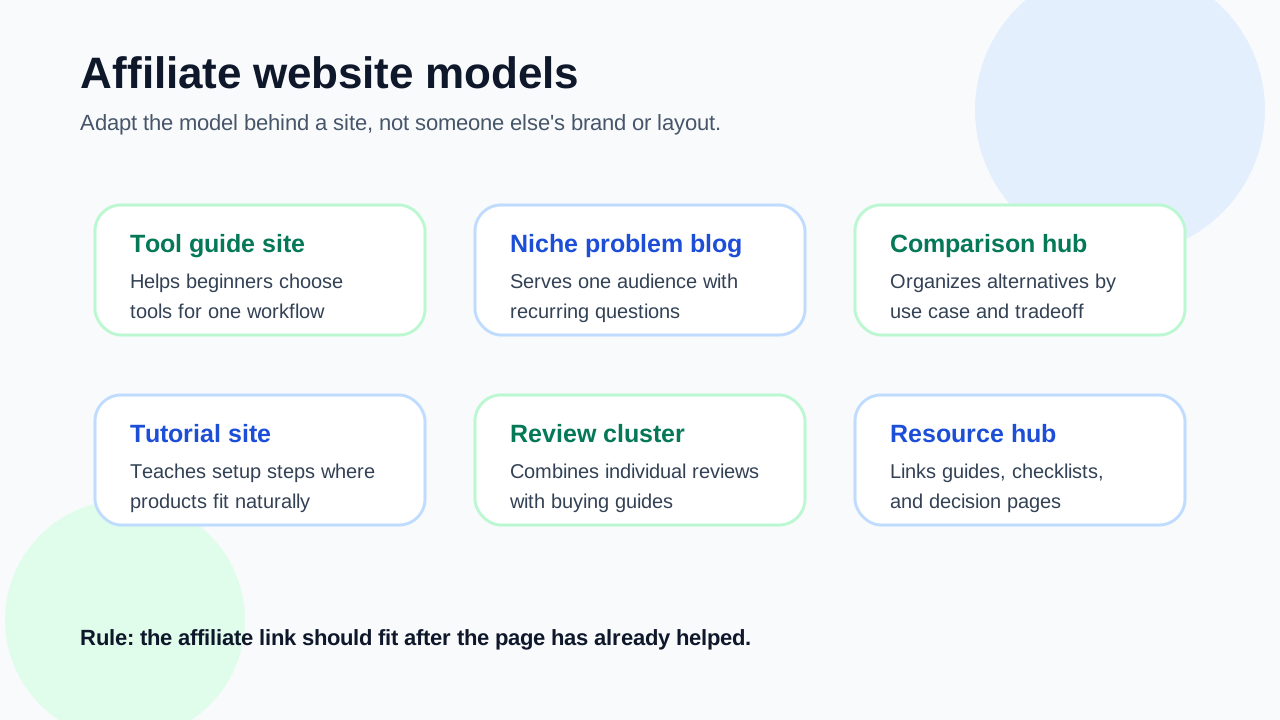
A better approach is to study the model behind the site: who it helps, what problem it solves, how it earns trust, and where affiliate recommendations fit naturally.
This guide walks through beginner-friendly affiliate website models you can adapt without copying anyone’s brand, content, or layout.
What a good affiliate website has in common
Good affiliate websites are not just collections of links. They usually have a few shared traits:
- a clear audience;
- a repeatable problem;
- helpful content before the recommendation;
- transparent disclosure;
- internal links that guide the reader;
- enough original judgment to make the page worth reading.
The site can be small. It can use a simple WordPress setup. It does not need a giant team. But it does need a reason for readers to trust it.
If you are still deciding whether affiliate is your path, read Affiliate Passive Income first.
Example model 1: The beginner tool guide site
This site helps beginners choose tools for one clear workflow.
Examples of workflows:
- starting a WordPress blog;
- building a small newsletter;
- launching a simple online store;
- creating a content workflow with AI tools;
- setting up basic SEO tracking.
The content usually includes tutorials, comparisons, setup guides, and mistake checklists.
Why it works: people do not just want a tool. They want to know which tool fits their situation and how to use it without wasting money.
A beginner tool guide site could publish pages like:
- “Best website builder for a one-person service business”;
- “How to choose hosting for your first affiliate blog”;
- “Free vs paid keyword tools for a new site”;
- “What to set up before buying an email marketing tool.”
The affiliate links fit naturally because the reader is already choosing a tool. The page still needs to be useful even if the reader does not buy.
Example model 2: The niche problem blog
This model focuses on one audience with recurring problems.
Instead of covering “all tech tools,” it might focus on:
- remote workers setting up home office gear;
- parents choosing safe learning apps;
- small restaurant owners building a basic website;
- new bloggers trying to keep costs low;
- creators choosing simple camera and audio setups.
The strength of this model is focus. You can write in the reader’s language because you know their situation.
Good pages for this model include:
- beginner explainers;
- product selection guides;
- “before you buy” checklists;
- comparisons for specific budgets;
- setup tutorials.
The risk is going too broad. If your site helps everyone, it usually helps no one clearly.
Example model 3: The comparison and decision site
This site helps readers compare options before buying.
It can work for software, hosting, services, courses, tools, or physical products. The key is not the table. The key is judgment.
Weak comparison pages say: “Tool A has these features. Tool B has these features.”
Strong comparison pages say:
- who should choose Tool A;
- who should choose Tool B;
- which option is easier for beginners;
- which option gets expensive later;
- what each option is bad at;
- when neither option is the right choice.
This model can attract readers who are close to a decision, but it also needs trust. If every product is described as amazing, the site feels fake.
Example model 4: The tutorial-driven affiliate site
A tutorial-driven site teaches a process and recommends products only when they are needed.
For example, a site about building income websites could teach:
- how to buy a domain;
- how to set up WordPress;
- how to write the first money page;
- how to add internal links;
- how to check basic SEO issues;
- how to disclose affiliate links.
Affiliate links appear inside the workflow, not as random banners.
This can be beginner-friendly because readers are already trying to complete a task. The recommendation feels helpful when it removes friction from the task.
On OppMint, this is close to the path behind Build Websites, SEO Traffic, and Monetization Paths.
Example model 5: The resource hub
A resource hub collects recommended tools, templates, services, or guides for a specific audience.
The mistake is making a huge generic list. A useful resource hub is narrow.
Better examples:
- “Starter tools for a one-person affiliate website”;
- “Low-cost website stack for a local service business”;
- “SEO checklist and tools for a new WordPress blog”;
- “Simple content workflow for a beginner affiliate site.”
Each recommendation should explain why it is included, when to use it, and when to skip it.
This model works best after you already have supporting articles. Otherwise, it can become a thin list of links.
Example model 6: The review plus education site
This model combines product reviews with educational content.
A review alone may not be enough, especially if the reader does not understand the category yet. Education pages help readers understand the buying criteria before they reach the review.
For example, if the site reviews hosting, it can also explain:
- what shared hosting means;
- when a beginner does not need VPS;
- what SSL and backups are;
- why site speed matters;
- how renewal pricing can surprise people.
The review becomes more useful because the reader has context.
This model is especially good for beginner audiences because it reduces confusion before the purchase decision.
How to choose the right model
Do not choose based on what looks most profitable. Choose based on what you can explain well and maintain.
Ask yourself:
- Can I write at least 20 useful questions in this niche?
- Do people regularly buy tools, services, or products here?
- Can I explain the trade-offs better than a product page?
- Can I keep recommendations updated?
- Can I be transparent about affiliate relationships?
If the answer is yes, the model may be worth testing.
If the only reason you like the niche is commission size, be careful. A site built only around commission usually feels thin.
What pages should a starter affiliate site include?
A simple starter site can begin with:
- a homepage that explains who the site helps;
- an about page that builds trust;
- a privacy page;
- a visible affiliate disclosure;
- three to five helpful guides;
- one focused comparison or buying guide;
- one resource page if it genuinely helps.
You do not need hundreds of posts before the site has a shape. You need enough structure that a reader can understand what the site is for.
What not to copy from other affiliate sites
Studying examples is useful. Copying is not.
Do not copy:
- content structure without understanding the audience;
- product rankings without your own criteria;
- claims about earnings;
- screenshots or tables from another site;
- disclosures that do not match your own relationship;
- a niche just because another site seems successful.
Your job is to learn the pattern, then build your own version for your own audience.
A simple starter idea
Here is one beginner-friendly model:
Site idea: A guide for people building their first small affiliate website on a low budget.
Core pages:
- how to choose a niche without overthinking;
- best low-cost website stack for beginners;
- WordPress setup checklist;
- beginner affiliate disclosure guide;
- hosting comparison for one-site owners;
- SEO basics for a new affiliate blog.
Monetization: hosting, domain tools, WordPress themes, email tools, SEO tools, and beginner-friendly services only where they fit.
Why it can work: the audience has a clear goal, a clear budget concern, and many confusing buying decisions.
That is the kind of model OppMint is built to support.
What to do next
Affiliate website examples are useful when they help you choose a structure, not when they tempt you to copy someone else.
If you want to move from idea to plan, start with Website Ideas, then connect the idea to Affiliate Sites and Affiliate SEO.
If you want help shaping a site model, content map, and first monetization path, see Services.