Amazon Affiliate Website: Beginner Setup and Content Strategy
-
 OppMint Team
 - 06 Jun, 2026

An Amazon affiliate website can be a simple way to learn affiliate publishing, but it is not a shortcut to easy income. The site still needs a clear niche, useful content, honest recommendations, visible disclosure, and enough search demand to attract readers.
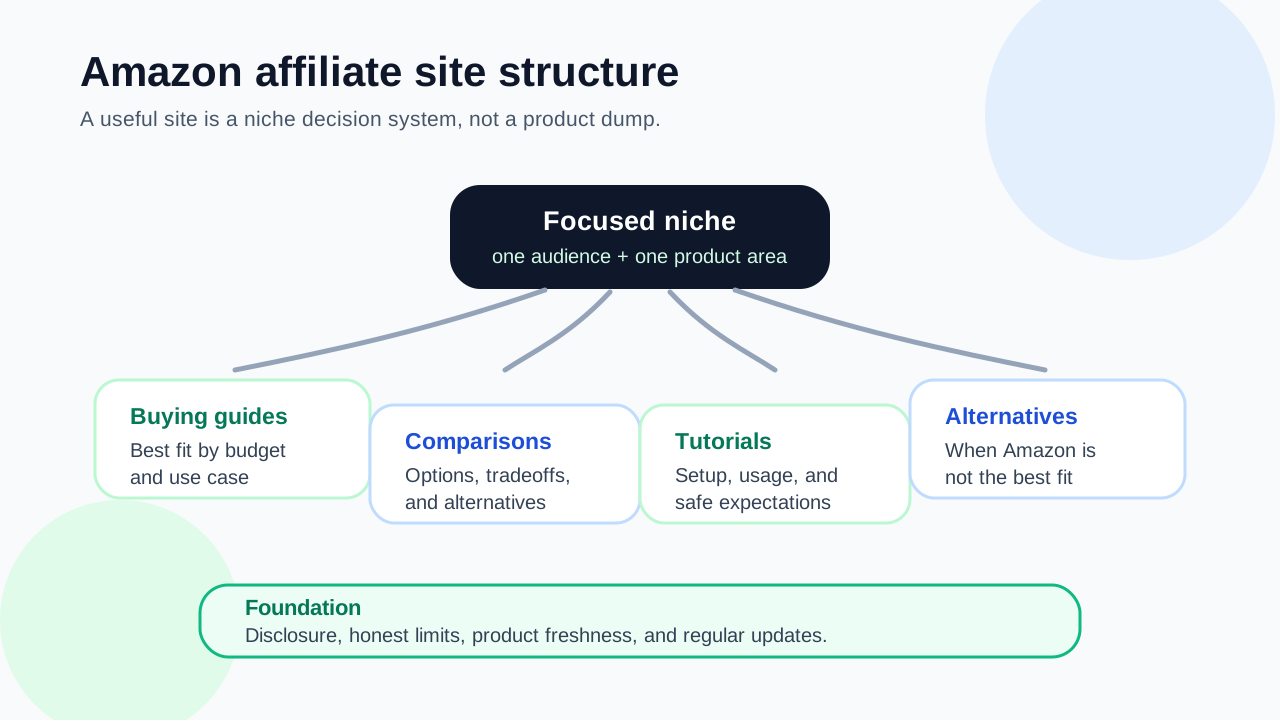
The best Amazon affiliate sites do not feel like product dumps. They help a specific audience choose, compare, and use products more confidently.
What is an Amazon affiliate website?
An Amazon affiliate website publishes content that may link to products on Amazon through the Amazon Associates program. If a reader clicks and buys, the publisher may earn a qualifying commission.
That is the basic mechanism. The harder part is building a site that readers trust.
A strong Amazon affiliate website usually includes:
- niche buying guides;
- product comparisons;
- beginner explainers;
- setup tutorials;
- checklists;
- alternatives pages;
- honest limitations;
- clear affiliate disclosure.
Amazon provides the program infrastructure, but your site still needs a real content strategy.
Step 1: Pick a product niche with enough depth
Do not start with “all Amazon products.” Start with one narrow audience and one product decision area.
Examples:
- home office gear for freelancers;
- beginner coffee brewing equipment;
- small apartment storage tools;
- budget fitness equipment for home workouts;
- desk accessories for students;
- pet care products for new dog owners;
- kitchen tools for small spaces.
A good niche should support many helpful articles, not just one “best products” list.
Before choosing, ask:
- Can I list 30 useful article ideas?
- Do beginners compare products before buying?
- Are there different budgets and use cases?
- Can I explain tradeoffs honestly?
- Are products available consistently?
- Can the niche support non-product educational content too?
The SBA’s business plan guidance is useful even here because it forces you to think about customers, products, marketing, and how the model works.
Step 2: Understand Amazon’s role
Amazon can be useful because many readers already know and trust the marketplace. But your site should not depend only on Amazon product links.
Reasons:
- products can go out of stock;
- prices change;
- reviews change;
- commissions can change;
- product pages may change;
- some products may not be the best fit.
Your long-term asset is not the link. It is the helpful content, audience trust, and site structure you build.
Step 3: Build a simple site structure
An Amazon affiliate website can start with a basic structure:
- Homepage or niche hub.
- About page.
- Affiliate disclosure page.
- Privacy policy.
- Main category page.
- Three educational articles.
- Two buying guides.
- One comparison article.
WordPress’s beginner documentation recommends planning and setup in stages. That is the right approach here: build the minimum useful version before adding plugins, tables, ratings, or complex layouts.
Step 4: Create useful content types
A strong Amazon affiliate website needs more than “best X” posts.
Buying guides
These help readers choose among product categories.
Example: “Best budget home office chairs for small rooms.”
A good buying guide explains selection criteria, tradeoffs, who each option fits, and what to check before buying.
Comparison pages
These help readers choose between two products or product types.
Example: “Manual coffee grinder vs electric grinder for beginners.”
How-to articles
These teach readers how to use, maintain, or choose products.
Example: “How to set up a small home office without wasting desk space.”
Mistake articles
These help readers avoid poor buying decisions.
Example: “Common mistakes when buying a first espresso grinder.”
Alternatives pages
These work when one product is popular but not right for every reader.
Example: “Best alternatives to a standing desk for small apartments.”
Google’s helpful content guidance is especially important here. Product pages should not only summarize what is already obvious on Amazon. They should add decision value.
Step 5: Use SEO structure carefully
Google’s SEO Starter Guide emphasizes clear, useful pages that users and search engines can understand. For an Amazon affiliate site, that means:
- one clear topic per page;
- descriptive titles;
- useful headings;
- readable URLs;
- internal links between related pages;
- original explanations;
- updated information;
- no keyword stuffing;
- no thin copied product descriptions.
Do not build pages only around product names. Build around decisions, problems, and use cases.
Step 6: Add affiliate disclosure clearly
If your page contains affiliate links, readers should understand that you may earn from qualifying purchases.
Place a clear disclosure near the start of relevant pages, not only on a hidden legal page.
Clear disclosure helps with trust. It tells readers you are being transparent about the business model.
Step 7: Avoid thin product summaries
A weak Amazon affiliate page often looks like this:
- product image;
- copied description;
- generic pros and cons;
- button to Amazon;
- no real explanation.
A stronger page explains:
- who the product is for;
- who should skip it;
- what problem it solves;
- what tradeoffs matter;
- what alternatives exist;
- how a beginner should compare options;
- what to check before buying.
This is the difference between a link page and a useful content website.
Step 8: Plan internal links
Internal links help readers move from learning to deciding.
Example path for a coffee gear site:
- “Beginner coffee setup checklist.”
- “Manual vs electric grinders.”
- “Best budget burr grinders.”
- “How to clean a coffee grinder.”
- “Common grinder buying mistakes.”
This kind of path gives your site depth and makes each page more useful.
Step 9: Keep recommendations updated
Amazon product availability, pricing, and quality signals can change. Review important pages regularly.
Check:
- product availability;
- broken links;
- outdated product names;
- new alternatives;
- old claims;
- page speed;
- disclosure placement;
- whether the article still matches search intent.
An affiliate site becomes more trustworthy when it is maintained.
Beginner Amazon affiliate site checklist
Before publishing, confirm you have:
| Item | Why it matters |
|---|---|
| Clear niche | Readers know what the site covers. |
| Helpful content cluster | The site has depth beyond product lists. |
| Disclosure | Readers understand affiliate relationships. |
| About page | Builds trust and context. |
| Buying criteria | Recommendations are easier to trust. |
| Internal links | Readers can move through related decisions. |
| Update process | Product content stays accurate. |
| Realistic expectations | The site is treated like a long-term project. |
Common Amazon affiliate website mistakes
Avoid these beginner mistakes:
- choosing a niche only because products are expensive;
- copying Amazon descriptions;
- publishing only best-of lists;
- hiding affiliate disclosure;
- ignoring product availability changes;
- writing about products you cannot explain;
- choosing a topic with no content depth;
- expecting income before traffic and trust exist.
A practical Amazon affiliate site is built around useful decisions, not just product links.
Final recommendation
If you want to build an Amazon affiliate website, start with a narrow product niche and a small content cluster. Publish helpful educational pages first, then add buying guides and affiliate links where they genuinely support the reader.
Treat Amazon as one monetization path, not the whole business. The real asset is the useful content website you build around a focused audience.
If you need the broader setup path, read How to Build an Affiliate Website. If you are still choosing a topic, explore Blog Niche Ideas.
FAQ
What is an Amazon affiliate website?
An Amazon affiliate website publishes helpful content and may link to Amazon products through the Amazon Associates program. The publisher may earn commissions from qualifying purchases.
Can beginners build an Amazon affiliate website?
Yes, but beginners should start with a focused niche, useful content, clear disclosure, and realistic expectations. It is not instant passive income.
What niche is best for an Amazon affiliate website?
The best niche has a clear audience, repeated buying decisions, enough product variety, and enough content depth to publish many helpful pages.
Do I need WordPress for an Amazon affiliate site?
No, but WordPress is a common choice because it supports content publishing, categories, plugins, and SEO controls. Other builders can work if they support long-form content and clean structure.
How many posts should I publish first?
Start with five to ten useful pages: a niche hub, educational articles, buying guides, and comparison pages. Expand after you see which topics attract readers.