Business Website Setup: A Practical Beginner Checklist
-
 OppMint Team
 - 06 Jun, 2026
Business website setup is not just buying a domain and choosing a template. A useful business website explains what you do, who you help, why visitors should trust you, and what they should do next.
For a small business, the website should support real business outcomes: calls, quote requests, bookings, email inquiries, product interest, local discovery, or trust before a customer contacts you.
Start with the business outcome
Before choosing a platform, define the primary outcome.
Examples:
- get consultation requests;
- help local customers find services;
- explain packages or pricing ranges;
- collect quote requests;
- answer common buyer questions;
- support referrals;
- publish helpful articles;
- build trust before a sales call.
If the site has no primary outcome, every design decision becomes harder. For inspiration before narrowing the offer, compare business website ideas that match different lead and trust goals.
Step 1: Define the audience and offer
A business website should make the offer easy to understand.
Clarify:
- who you serve;
- what problem you solve;
- what services or products you provide;
- where you operate, if location matters;
- what makes the offer different;
- what the customer should do next.
Google’s helpful content guidance applies to business pages too. Pages should help visitors understand and act, not just repeat keywords.
Step 2: Choose the first site structure
A practical business website can start small.
Recommended first structure:
- Homepage.
- About page.
- Services or offer page.
- Contact page.
- FAQ section.
- Privacy policy.
- Three helpful articles or resource pages.
A local or service business may also need location pages later, but do not create many thin city pages before the main site is useful.
Step 3: Pick a domain and platform
Choose a domain that is easy to remember and aligned with the business name or service.
Then choose a platform based on how the site will be maintained.
| Need | Better fit |
|---|---|
| Simple brochure site | Hosted website builder |
| Content and SEO growth | WordPress |
| Technical control | Static site generator |
| Product catalog or checkout | Ecommerce platform |
| Lead generation landing pages | Builder, WordPress, or custom site |
The best platform is the one you can keep updated. An outdated business website can reduce trust. If simplicity matters most, compare the easiest website builder for small business before choosing a more flexible setup.
Step 4: Prepare the essential pages
Homepage
The homepage should quickly answer:
- what the business does;
- who it helps;
- where it operates;
- the main service or product categories;
- why visitors should trust it;
- what action to take next.
Do not make visitors guess.
Services page
A services page should explain scope, fit, process, and next steps.
Include:
- service names;
- who each service is for;
- what is included;
- common outcomes;
- what is not included;
- contact or booking path.
Avoid vague service descriptions like “high quality solutions” without specifics.
About page
The about page should build confidence. It can include the business story, experience, working style, and who the business is best suited for.
Contact page
The contact page should explain what happens after a visitor reaches out.
If using a form, ask only for information you actually need.
Step 5: Add trust signals
Trust signals help visitors decide whether to contact you.
Useful trust signals include:
- clear business name;
- real service descriptions;
- location or service area when relevant;
- privacy policy;
- testimonials or examples when available;
- transparent process;
- realistic claims;
- clear contact path;
- updated content.
Do not fake reviews, results, or client logos. Weak trust is better than false trust.
Step 6: Set up basic SEO
Google’s SEO Starter Guide focuses on clear, useful pages that search engines and users can understand.
For a business website, basic SEO includes:
- clear title tags;
- descriptive meta descriptions;
- one main topic per page;
- readable URLs;
- headings that match the page content;
- internal links between service and article pages;
- useful local or niche context;
- mobile-friendly layout;
- fast enough loading;
- no keyword stuffing.
Business SEO should follow customer questions. If customers ask the same question before buying, that question may deserve a page or FAQ.
Step 7: Build a lead path
A business website should not leave visitors at a dead end.
Common lead paths:
- contact form;
- email link;
- booking calendar;
- quote request;
- phone number;
- service consultation;
- downloadable checklist;
- newsletter for longer buying cycles.
The right path depends on the business. A high-trust consulting service may need a detailed inquiry form. A local emergency service may need a visible phone number.
Step 8: Add helpful content after the core pages
Do not publish random blog posts just to look active.
Helpful business content can include:
- buyer questions;
- comparison pages;
- cost explainers;
- preparation checklists;
- mistake guides;
- service process explainers;
- maintenance tips;
- local or niche resource pages.
Content should support the service pages, not distract from them.
Step 9: Keep the design simple
A business website does not need complicated animation or heavy visual effects.
Prioritize:
- readable text;
- clear sections;
- strong contrast;
- mobile-friendly layout;
- obvious buttons;
- short forms;
- fast page loading;
- easy navigation.
A plain site that explains the business clearly is stronger than a beautiful site that hides the offer.
Step 10: Review before launch
Before launching, check:
| Setup item | Question to ask |
|---|---|
| Homepage | Can a visitor understand the business in seconds? |
| Services | Are offers specific and clear? |
| Contact | Is the next step obvious? |
| Mobile | Can visitors read and tap easily? |
| SEO basics | Do titles, URLs, and headings match the content? |
| Trust | Does the site feel accountable? |
| Privacy | Does the site explain how information is handled? |
| Maintenance | Can someone update the site later? |
Launch only when the site is useful enough, not perfect.
Common business website setup mistakes
Avoid these mistakes:
- starting with design before offer clarity;
- using generic homepage copy;
- hiding services behind vague labels;
- asking for too much contact information;
- publishing thin location pages;
- ignoring mobile layout;
- making claims without proof;
- leaving old pricing, hours, or services online;
- building a blog with no connection to leads.
A business website should support trust and action.
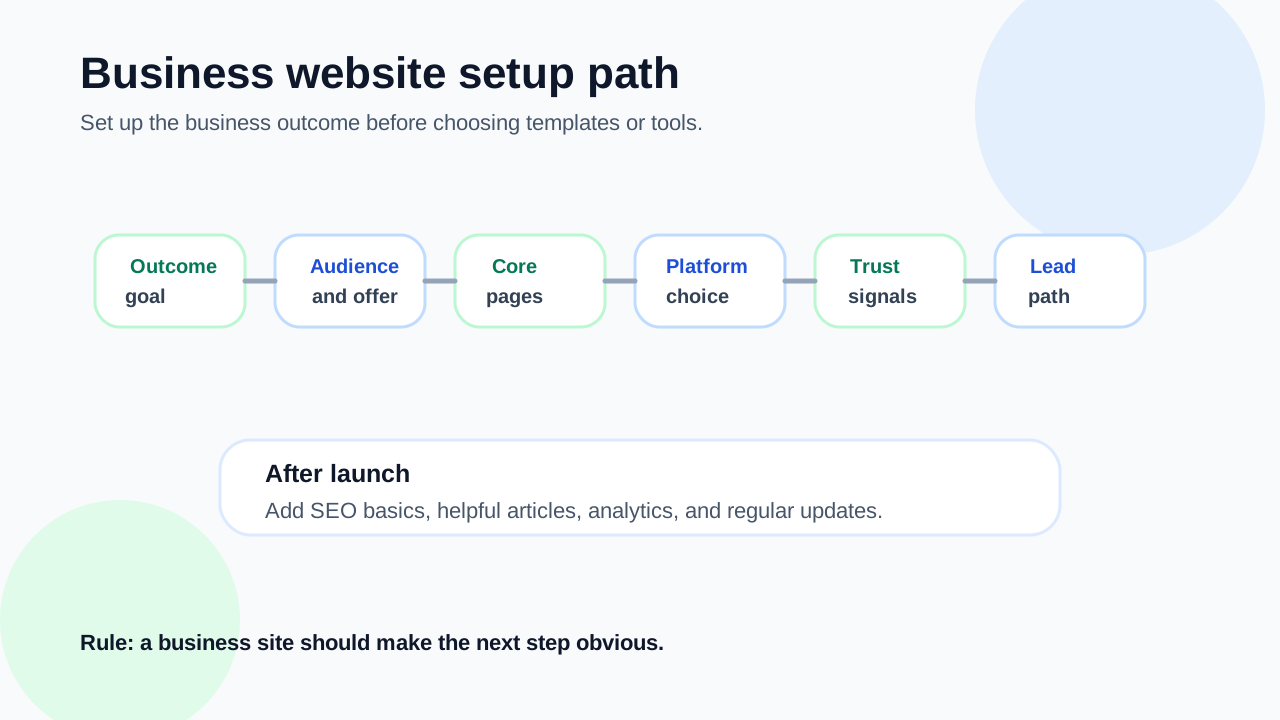
A simple business website setup sequence
Use this sequence:
- Define the primary business outcome.
- Clarify the audience and offer.
- Choose a domain and platform.
- Build homepage, services, about, contact, and privacy pages.
- Add one clear lead path.
- Set basic SEO fields and internal links.
- Publish three helpful support pages.
- Review mobile layout.
- Launch.
- Improve based on inquiries, questions, and search data.
This sequence keeps the site practical.
Final recommendation
Business website setup should begin with the customer journey, not the template. Build a small site that explains the offer, earns trust, answers common questions, and gives visitors a clear way to act.
Once the basic site works, expand with content, SEO pages, lead magnets, case studies, or automation. Do not add complexity before the core business path is clear.
If you are still planning the first site, read How to Create a Website for Beginners. If you want a small-business-specific build path, continue with How to Build a Website for Small Business.
FAQ
What pages does a business website need first?
Start with a homepage, services or offer page, about page, contact page, privacy policy, and a few helpful articles or FAQ sections.
What is the most important part of business website setup?
The most important part is clarity: who you serve, what you offer, why visitors should trust you, and what they should do next.
Should a business website have a blog?
A blog can help if it answers customer questions and supports service pages. Do not publish random posts that do not connect to the business goal.
Which platform is best for a business website?
Hosted builders can work for simple sites. WordPress is often better for content and SEO growth. The best choice depends on maintenance, content needs, and technical comfort.
How can a business website get more leads?
Improve offer clarity, trust signals, mobile usability, service pages, local or niche content, internal links, and the contact path before adding advanced marketing tools.