AI Tools for Solo Founders Building a Content Website
-
 OppMint Team
 - 09 Jun, 2026
AI tools can help a solo founder build a content website faster, but they cannot replace the part that makes the site worth trusting. They can organize research, draft outlines, create checklists, and spot gaps. They should not invent experience, fake sources, or decide what your audience should believe.
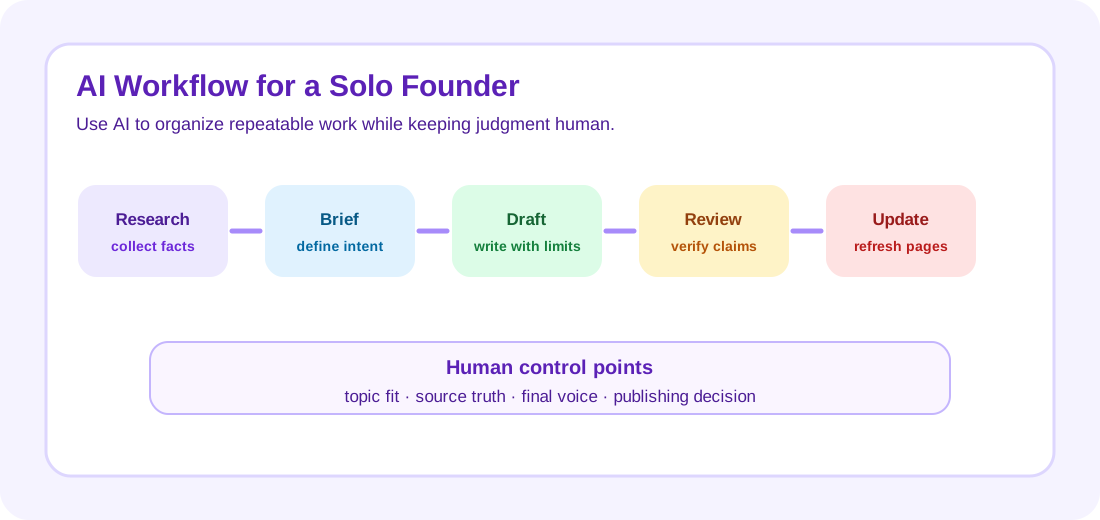
A solo founder has limited time. The right AI workflow protects that time by making repeatable work easier while keeping judgment, source checks, and final recommendations under human control.
Start with the workflow, not the tool stack
A content website does not need ten AI tools on day one. It needs a repeatable publishing system.
A practical workflow looks like this:
| Stage | AI can help with | You still own |
|---|---|---|
| Topic selection | group ideas, cluster intent, compare angles | decide what fits the site |
| Research | summarize sources, extract facts, list open questions | verify current facts |
| Brief | structure sections, define search intent, plan internal links | approve the content angle |
| Draft | turn notes into a first draft | add judgment and examples |
| Editing | reduce repetition, improve clarity, check missing sections | final voice and accuracy |
| QA | flag broken logic, weak claims, missing links | publish decision |
| Updating | create refresh checklists | confirm sources before changes |
This workflow is safer than asking an AI tool to “write articles” in bulk. The goal is not more pages. The goal is more useful pages.
Use AI to organize research
Research organization is one of the highest-value uses of AI for a solo founder. A content website often fails because claims are scattered across notes, bookmarks, product pages, and old drafts.
AI can turn messy inputs into a structured table:
- source URL;
- source type;
- useful fact;
- quote or evidence note;
- uncertainty;
- where it might fit in the article;
- what still needs manual verification.
That last column matters. If a fact is not verified, it should not become a confident claim. This is especially important for affiliate content, pricing pages, product comparisons, and service recommendations.
The same principle appears in AI Tools for Affiliate Marketing: AI should make evidence easier to review, not hide missing evidence.
Turn every topic into a brief before drafting
A brief keeps a solo founder from writing random posts. It defines the job of the page before the draft begins.
A useful brief should include:
- audience;
- search intent;
- primary problem;
- must-answer questions;
- internal links;
- source requirements;
- what not to claim;
- next step for the reader.
For a content website, this is often more valuable than a polished first draft. A strong brief prevents duplicate pages, weak introductions, and articles that have no path back to the site’s business model.
If your site is still choosing a niche, use Blog Niche Ideas before building a large workflow.
Draft with constraints, not with blank prompts
Blank prompts produce generic articles. A solo founder should give the AI tool constraints:
- use only the approved brief;
- do not add unverified facts;
- include examples tied to the target audience;
- keep internal links natural;
- explain when the reader should not choose this option;
- leave placeholders where evidence is missing.
This turns AI into a drafting assistant rather than an unchecked publisher. It also makes editing easier because the draft has a known purpose.
Build a human review checklist
Every content workflow needs a final review layer. For a solo founder, the checklist should be short enough to use every time.
Before publishing, check:
- Does the article answer the main search intent?
- Are factual claims tied to sources?
- Are affiliate, pricing, or product claims verified?
- Does the page link to the next useful internal page?
- Does the introduction avoid generic filler?
- Are there examples, risks, and decision criteria?
- Is there a clear next step for the reader?
This keeps AI output from turning into thin content. Google’s helpful content guidance is useful here: the page should exist for readers, not only for search engines.
Use AI for updates, not just new drafts
A content website becomes more valuable when old pages stay accurate. AI can help maintain a refresh queue:
- list articles with commercial or time-sensitive claims;
- mark the last source-check date;
- compare current source notes with old sections;
- flag claims that need review;
- suggest internal links from new pages to old pages;
- summarize reader questions that could become updates.
Do not let AI update pricing, product limits, affiliate terms, or legal claims without checking the current source. The tool can show what to review, but the founder still decides what is true.
Choose tools by job
A simple solo-founder stack may include:
| Job | Tool type |
|---|---|
| source collection | browser, notes, spreadsheet, or research assistant |
| brief creation | AI writing assistant plus your template |
| drafting | AI editor with source constraints |
| image support | SVG/diagram tool or image editor |
| SEO QA | checklist, crawler, or site audit tool |
| updates | calendar, database, or content tracker |
Do not buy tools before the workflow is clear. If the workflow is weak, automation only creates more weak pages.
For a broader tool-planning angle, compare Content Strategy Tools. If the goal is revenue, connect the workflow to How to Make Revenue From a Website so every page has a business purpose.
Next step
Create one reusable content brief template and use it for the next five articles. Track which sections were easy, which facts were hard to verify, and which internal links felt natural. That feedback will tell you which AI tools are worth adding.
If the site already attracts readers but has no service path, connect the workflow to Content Website to Service Lead Funnel. A content system is stronger when it supports a clear next step.
FAQ
Can AI write all content for a solo founder website?
AI can draft and organize, but the founder should still own topic fit, source verification, final judgment, and reader trust.
What is the safest first AI workflow for a content site?
Start with research organization and brief creation. These steps save time without turning unchecked output into published advice.
Should I use AI for affiliate content?
Yes, but only with source checks and disclosure discipline. AI can organize comparisons, but it should not invent product experience or commission details.
How many AI tools does a solo founder need?
Usually fewer than expected. One research/brief workflow, one drafting/editing workflow, and one QA/update checklist are enough to start.