How to Make Revenue from Website Traffic and Trust
-
 OppMint Team
 - 06 Jun, 2026
Learning how to make revenue from a website starts with a simple idea: a website earns when it helps the right visitor take a valuable next step.
That next step may be clicking a relevant affiliate recommendation, reading ad-supported content, booking a service, joining an email list, buying a digital product, or requesting a quote. The revenue model should match the visitor’s intent.
What website revenue really depends on
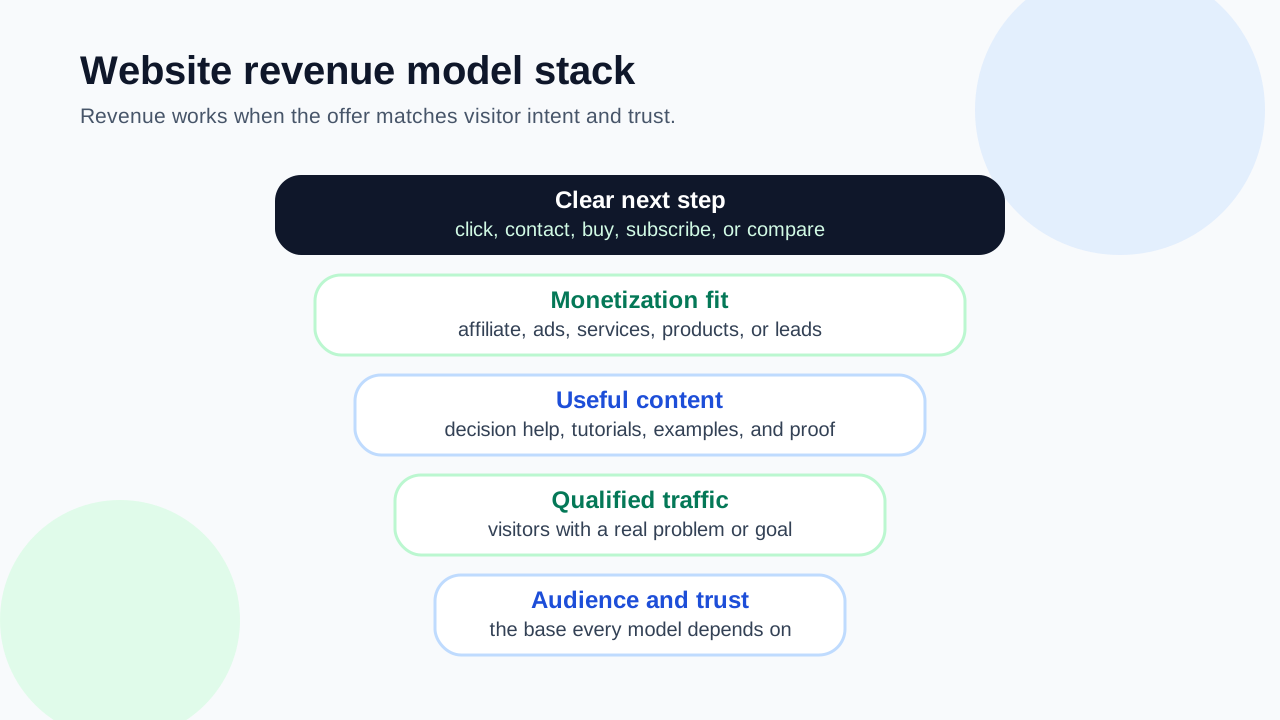
A website does not make money just because it is online. Revenue depends on:
- a clear audience;
- a real problem or decision;
- useful content;
- trust;
- traffic from search, referrals, email, or direct visits;
- a monetization path that fits the page;
- clear next steps.
The SBA’s business plan guidance is useful even for small websites because it forces you to define what you offer, who you serve, how you reach them, and how the business makes money.
1. Affiliate revenue
Affiliate revenue comes from recommending products, tools, or services and earning a commission when readers buy through your link.
Best fit:
- product comparisons;
- software guides;
- hosting and domain content;
- tool roundups;
- alternatives pages;
- buying checklists;
- setup tutorials.
Affiliate revenue works best when readers are already comparing options. It works poorly when the content is thin, generic, or only written to push links.
Clear disclosure is important. Readers should understand when a recommendation may earn compensation.
2. Display ad revenue
Display ads can monetize informational traffic, especially when a website has many useful pages and consistent visitors.
Google AdSense explains the basic model: publishers make ad spaces available, advertisers bid to show ads, and earnings vary based on the site, content, and visitors.
Ads are usually not the fastest path for a new website because they need traffic volume.
Best fit:
- evergreen how-to content;
- broad informational niches;
- tutorial libraries;
- hobby and education sites;
- content websites with many pages.
Avoid covering the page with ads before the site has earned trust. A bad reading experience can reduce long-term value.
3. Service revenue
Services are often the fastest website-backed revenue path for beginners.
Examples:
- website setup;
- SEO audits;
- content editing;
- automation setup;
- analytics setup;
- landing page writing;
- WordPress cleanup;
- consulting.
A service page does not need huge traffic. It needs clear positioning, proof, scope, and a contact path.
Best fit: people with a practical skill who want revenue before building a large content engine.
4. Digital product revenue
Digital products can turn repeated questions into paid resources.
Examples:
- templates;
- checklists;
- spreadsheets;
- Notion dashboards;
- mini-courses;
- paid guides;
- prompt packs;
- worksheets.
This model works best after you understand what your audience repeatedly needs. Do not build a large product before validating the problem.
A website helps by giving the product a landing page, FAQ, update log, and support path.
5. Lead generation revenue
A lead generation website helps visitors request a quote, consultation, provider match, or service contact.
Best fit:
- local services;
- B2B setup help;
- professional service comparisons;
- niche repair or consulting;
- high-intent service pages.
Lead generation requires extra trust. If you collect personal information, explain what happens next and do not ask for more than you need.
6. Email list revenue
An email list does not create revenue by itself, but it can support revenue over time.
Email can help you:
- share new guides;
- launch digital products;
- follow up with service leads;
- build trust with readers;
- recommend tools carefully;
- understand repeated audience questions.
Best fit: education niches, creator workflows, service businesses, and content sites with repeat reader needs.
7. Sponsorship revenue
Sponsorships can work when your site has a focused audience that businesses want to reach.
This usually comes later, after the site has traffic, trust, and a clear audience.
Best fit:
- niche newsletters;
- focused tool directories;
- industry resource hubs;
- sites with engaged returning readers.
Do not start with sponsorships unless you already have audience proof.
Match revenue model to search intent
Use this table to match page type with monetization.
| Visitor intent | Better revenue fit |
|---|---|
| Comparing tools | Affiliate links, comparison pages, email capture |
| Learning basics | Ads later, internal links, email, service CTA |
| Needing help | Services, consultation, lead generation |
| Looking for templates | Digital products, email, services |
| Reading broad information | Ads, newsletter, internal links |
| Choosing hosting or software | Affiliate links, setup service, checklist |
Google’s helpful content guidance is important here. Monetization should not replace usefulness. It should follow from the visitor’s task.
Start with one primary revenue path
Beginners often add too many monetization methods at once:
- ads;
- affiliate links;
- products;
- services;
- sponsorships;
- email funnels;
- paid communities.
This can make the site confusing.
Start with one primary path that matches the site’s strongest intent. Add a second path only after the first one makes sense.
A practical revenue sequence for beginners
If you are starting a new website, use this sequence:
- Choose one audience problem.
- Pick one primary revenue model.
- Build the minimum useful site.
- Publish five helpful pages.
- Add one clear next step.
- Measure which pages get attention.
- Improve those pages.
- Add a second revenue path only when it supports the reader.
WordPress’s beginner documentation starts with planning and setup in stages. Website monetization should work the same way: plan, publish, learn, then expand.
Example revenue combinations
Affiliate content plus email
A tool comparison site can use affiliate links on decision pages and collect email subscribers from educational pages.
Service site plus articles
A website setup service can publish beginner guides that build trust and point to a service page when readers want help.
Blog plus ads later
An educational content site can publish deeply first, then add ads after traffic becomes steady.
Digital product plus free guides
A template seller can publish free how-to articles, then offer a paid shortcut for readers who want the faster version.
Mistakes to avoid
Avoid these revenue mistakes:
- adding ads before the site has meaningful traffic;
- recommending products only because commissions are high;
- creating products before validating demand;
- collecting leads without a clear follow-up process;
- hiding affiliate relationships;
- building a huge site before proving the niche;
- ignoring costs like hosting, tools, time, and content production.
Revenue should be planned like a business model, not added randomly after publishing.
Final recommendation
To make revenue from a website, match the monetization path to the visitor’s intent. Affiliate links work for comparisons, ads work after traffic grows, services work when readers need help, products work when you can package a repeatable solution, and leads work when intent is strong.
Start small: one audience, one problem, one revenue path, and a few helpful pages. Then improve based on traffic, clicks, questions, and trust signals.
If you are choosing a model, read Make Money Online Website Types. If you are ready to build the site, continue with Build Websites.
FAQ
How do websites make revenue?
Websites can make revenue through affiliate links, display ads, services, digital products, lead generation, sponsorships, email-supported offers, or a mix of these models.
What is the easiest website revenue model for beginners?
Services are often easiest because they need fewer visitors. Affiliate content can also work if the site helps readers compare options and builds trust.
Can a website make money with ads only?
Yes, but ads usually require consistent traffic. New websites often need another path, such as services or affiliate content, before ad revenue becomes meaningful.
Should I add multiple revenue models at once?
Usually no. Start with one primary model that matches visitor intent. Add more only after the site has traffic, trust, or repeated reader needs.
What should I build before monetizing?
Build a clear niche structure, helpful pages, trust signals, disclosure where needed, and one clear next step for visitors.