Niche Ideas: How to Choose a Website Topic That Can Grow
-
 OppMint Team
 - 06 Jun, 2026

Good niche ideas are not just topics you like. For an income website, a niche needs enough audience demand, enough content depth, and at least one realistic monetization path.
A weak niche can look exciting at first, then run out of article ideas, buyer intent, or trust signals. A strong niche gives you room to publish helpful content, build internal links, recommend tools or services honestly, and eventually earn from affiliate offers, services, products, leads, or ads.
What makes a niche idea useful for a website?
A useful niche sits at the intersection of four things:
- Audience pain: people have a problem, question, goal, or decision.
- Content depth: you can publish many helpful pages without repeating yourself.
- Monetization fit: the topic connects naturally to products, services, leads, ads, or digital resources.
- Trust potential: you can explain the topic clearly enough for beginners to rely on you.
If a niche has only one article idea, it is usually not a website niche. It may be a single blog post, landing page, or small product instead.
Start with audience problems, not random keywords
Keyword tools can help later, but niche selection should start with real people.
Ask:
- What does this audience struggle to choose?
- What mistakes do beginners make?
- What do they buy after researching?
- What do they search before spending money?
- What process could be made simpler?
- What questions come up repeatedly?
The SBA’s market research guidance recommends looking at demand, market size, competition, pricing, and saturation. For a small website, that means you should not choose a niche only because it sounds fun. You need signs that people already care.
Test whether the niche has content depth
A beginner income website needs more than a homepage and two articles. Before committing, list possible page clusters.
For example, a niche around beginner WordPress blogs could include:
- choosing hosting;
- domain setup;
- WordPress themes;
- blog niche planning;
- SEO basics;
- content calendars;
- affiliate disclosure;
- internal linking;
- analytics;
- email list setup;
- monetization paths.
That is a real content ecosystem.
A niche like “funny desk quotes” may get some searches, but it may not support deep content, trust, or monetization unless you connect it to a broader product or audience strategy.
Check monetization before building
A niche does not need to make money on day one, but it should have a plausible path.
Common website monetization paths include:
| Monetization path | Best niche fit |
|---|---|
| Affiliate links | Tools, software, hosting, products, gear, services |
| Services | Business problems, technical setup, marketing, consulting |
| Digital products | Repeatable templates, checklists, courses, frameworks |
| Display ads | High-volume informational content |
| Lead generation | High-intent service or local/business niches |
| Sponsorships | Focused audiences with commercial value |
If you cannot name how the niche might earn later, keep researching before you build.
Avoid niches that are too broad
Beginners often pick topics like:
- business;
- fitness;
- travel;
- technology;
- finance;
- marketing;
- lifestyle.
These are not niches. They are industries.
A better niche narrows the audience and problem:
- SEO for local service websites;
- WordPress blogs for solo creators;
- budget home office setups for freelancers;
- beginner affiliate sites for software tools;
- content systems for small consulting businesses;
- simple websites for local trades.
Narrowing makes your site easier to structure and easier for readers to trust.
Use search intent as a filter
Google’s SEO Starter Guide and helpful content guidance both point toward building pages that help users. For niche selection, this means you should look for search intent you can actually satisfy.
Strong niche intents include:
- comparison: “X vs Y”;
- setup: “how to start X”;
- troubleshooting: “why X is not working”;
- buying support: “best X for beginners”;
- planning: “X checklist”;
- strategy: “how to improve X”.
Weak intent is vague, purely inspirational, or impossible to answer better than existing sources.
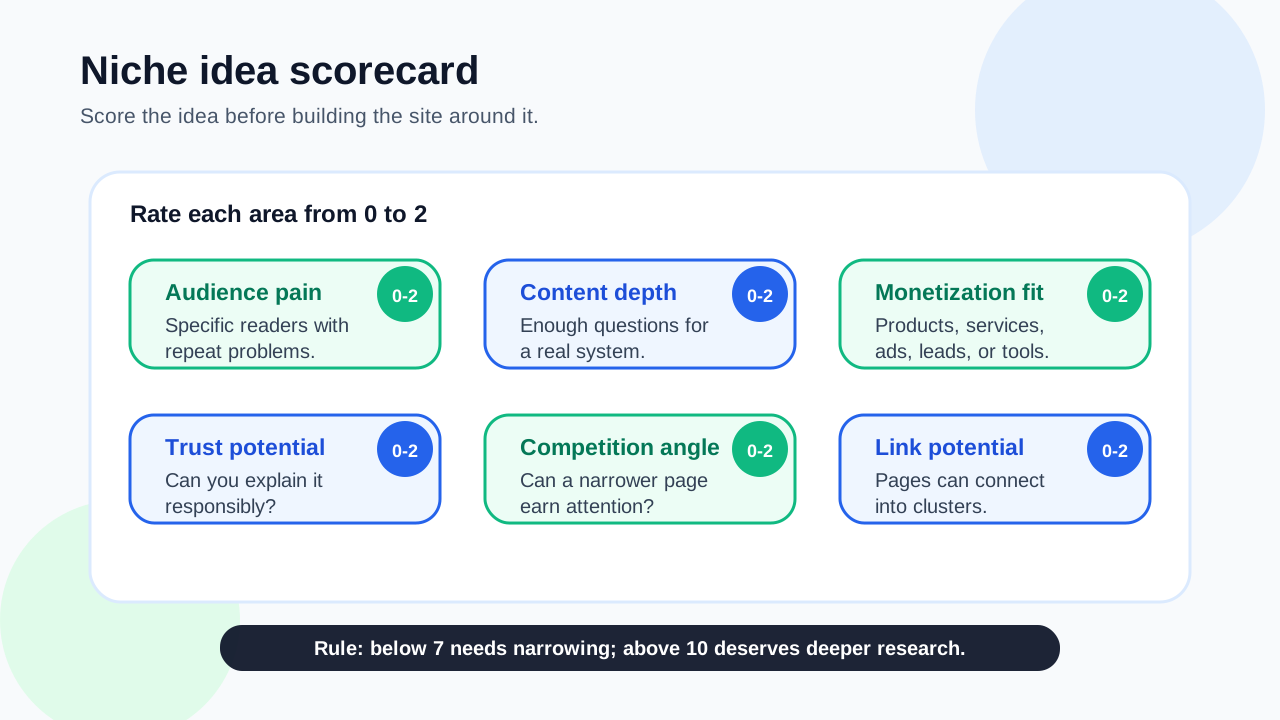
Score your niche idea
Use this simple scoring table before building.
| Question | Score 0-2 |
|---|---|
| Does a clear beginner audience exist? | |
| Are there at least 30 useful article ideas? | |
| Can the topic connect to products, tools, services, or leads? | |
| Can you add practical experience or clear explanations? | |
| Is the competition beatable with a narrower angle? | |
| Can the niche support internal links between pages? | |
| Would someone trust a small independent site in this niche? |
A score under 7 usually needs more narrowing. A score above 10 is worth deeper keyword research and a content plan.
Beginner-friendly niche idea categories
Here are practical categories that can support small income websites:
Website and online business setup
This includes hosting, builders, domains, WordPress, landing pages, SEO basics, and simple automation. It works well because beginners have many decisions and tools to compare.
Local service growth
Examples include websites for plumbers, tutors, photographers, cleaning companies, fitness coaches, and consultants. These niches can connect content, SEO, and service offers.
Creator workflow tools
This includes content planning, editing tools, AI writing workflows, video tools, newsletter systems, and productivity templates.
Home and lifestyle buying decisions
These can work for affiliate content if you can write honest comparisons and practical guides, not just product lists.
Specialized beginner education
Examples include beginner bookkeeping, basic design, simple analytics, no-code setup, or niche career skills.
Small business operations
This includes scheduling, invoicing, CRM, website setup, email marketing, and simple automation for solo operators.
Turn a niche idea into a site structure
Once you choose a niche, do not start by writing random posts. Build a basic structure:
- Main topic page.
- Three to five subtopic pages.
- Beginner guide articles.
- Comparison or decision pages.
- Monetization pages or service pages.
- Internal links between related pages.
WordPress’s beginner documentation recommends reading, planning, installing, and setting up in stages. That same staged approach applies to niche sites: plan the structure first, then build.
Final recommendation
The best niche ideas are narrow enough to be clear, deep enough to support content, and commercial enough to connect to revenue without forcing it.
Do not pick a niche only because it has search volume. Pick one where you can help a real beginner make better decisions.
If you want to keep exploring, browse Website Ideas. If you already have a niche and need the build path, go to Build Websites or start with Start Here.
FAQ
What are niche ideas?
Niche ideas are focused topic areas for a website, business, blog, or service. A good niche has a specific audience, repeatable problems, content depth, and a realistic way to earn later.
What makes a good niche website?
A good niche website helps a defined audience solve related problems through useful pages, clear internal links, and a monetization path such as affiliate content, services, products, ads, or leads.
Should I choose a niche based on search volume?
Search volume matters, but it should not be the only factor. Also check audience intent, competition, content depth, trust, and monetization fit.
How narrow should my niche be?
Narrow enough that a beginner immediately understands who the site helps, but broad enough to support dozens of useful pages.
Can I change my niche later?
Yes, but it is better to pivot within a related topic cluster than to restart completely. Start narrow, learn from traffic and questions, then expand carefully.