Free SEO Tools for Website Checks Before You Publish
-
 OppMint Team
 - 06 Jun, 2026
Free SEO tools for website checks can help you launch and improve a small site without paying for a large platform immediately. The key is knowing what each tool should help you decide.
For a beginner income website, free tools should help you answer: can search engines find the page, does the page match the topic, does it load well enough, and does it guide readers to the next step?
What free SEO tools can cover
Free tools can help with:
- indexing checks;
- sitemap validation;
- robots and crawl checks;
- keyword ideas;
- title and snippet review;
- page speed testing;
- internal link review;
- content planning;
- basic technical audits.
They may not replace advanced paid platforms, but they are enough to build a strong foundation.
Search Console for real site data
Search Console should be part of almost every website SEO setup.
It helps you monitor:
- indexed pages;
- crawl issues;
- sitemap status;
- queries that trigger impressions;
- pages that get clicks;
- URL inspection results;
- changes after important updates.
For a new website, this data is more valuable than guessing what Google sees.
Sitemap tools for discovery
A sitemap helps search engines discover URLs you want crawled.
Use sitemap checks to confirm:
| Check | Reason |
|---|---|
| Sitemap exists | Search engines can discover submitted URLs |
| Important pages are included | Core pages are not forgotten |
| Draft pages are excluded | Unfinished pages stay private |
| Sitemap is accessible | Crawlers can read it |
| Search Console accepts it | You can monitor discovery |
A sitemap is not a ranking shortcut, but it is a basic discovery tool.
Robots checks for crawl access
Robots rules can accidentally block important pages.
Before launch or after a redesign, check whether:
- important pages are blocked;
- private areas are protected appropriately;
- the sitemap is referenced when useful;
- test or duplicate pages are not exposed;
- crawl rules match your actual site structure.
A simple robots mistake can prevent useful pages from being discovered.
Page speed tools for user experience
Page speed tools help you find performance problems that affect users.
Focus on practical fixes:
- reduce oversized images;
- avoid unnecessary scripts;
- improve mobile readability;
- reserve space for images and layout elements;
- make key content visible quickly;
- keep navigation usable on phones.
Do not spend all your time chasing a perfect score if the content itself is weak.
Title and meta checks
Free checks can help you review page titles and descriptions.
For each important page, confirm:
- the title is unique;
- the page topic is clear;
- the description matches the content;
- the title is not stuffed with keywords;
- the title is not misleading;
- similar pages do not use duplicate titles.
Clear titles help users and search engines understand what each page is for.
Keyword research with free tools
Free keyword tools can help you find topic ideas, related phrases, and seasonal patterns.
Use them to ask:
- What problem is the searcher trying to solve?
- Is the query informational, commercial, or transactional?
- What type of page appears in search results?
- Can your site answer the query better or more clearly?
- Does the topic connect to your site goal?
Keyword research is not just collecting phrases. It is choosing which user problems your site should solve.
Content quality checks
Free tools can identify missing fields, but you still need editorial judgment.
Before publishing, check whether the page includes:
- a direct answer;
- useful examples;
- clear headings;
- realistic expectations;
- internal links to next steps;
- no unsupported claims;
- no thin duplicate content.
Helpful content should leave the reader more ready to act.
Internal link checks
A small site can start with manual internal link review or a spreadsheet.
Track:
- which pages link to this page;
- which pages this page links to;
- whether anchor text is descriptive;
- whether important pages have enough relevant links;
- whether any page is orphaned;
- whether old links are broken or redirected.
Internal links turn separate articles into a usable website.
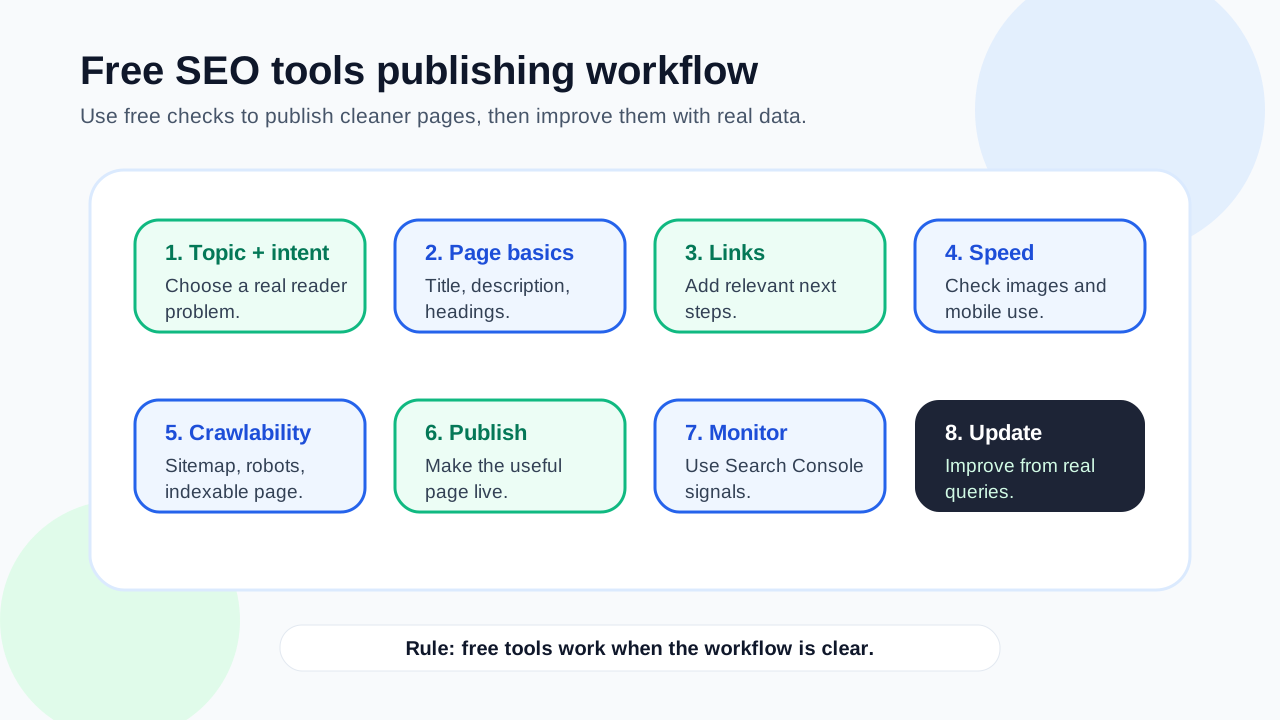
A free website SEO workflow
Use this simple workflow:
- Choose a topic from real keyword or audience data.
- Check search intent.
- Draft a useful page structure.
- Write a clear title and description.
- Add relevant internal links.
- Check page speed and mobile usability.
- Confirm crawlability and sitemap inclusion.
- Publish.
- Monitor Search Console.
- Update based on real data.
Free tools are enough for this workflow when the site is still small.
When to consider paid tools
Paid SEO tools may help when:
- you manage many pages;
- you need competitor research;
- you track many keywords;
- you audit large sites frequently;
- you need automated reporting;
- you have enough traffic data to prioritize updates.
Do not upgrade only because a tool shows more charts. Upgrade when it helps you make better decisions faster.
Common mistakes
Avoid these mistakes with free SEO tools:
- using too many tools with no workflow;
- trusting scores without reading the page;
- ignoring Search Console;
- choosing keywords without intent analysis;
- fixing technical warnings while publishing thin content;
- forgetting internal links;
- not checking mobile pages;
- never updating after launch.
A small set of tools used consistently is better than a large stack used randomly.
Final recommendation
Use free SEO tools for website checks that cover indexing, sitemap access, robots rules, page speed, titles, keyword ideas, content quality, and internal links. If you need a broader beginner stack, compare the best SEO tools for beginners before upgrading. Start with the basics, then upgrade only when your site has enough pages and data to justify it.
If you are launching a site, follow the New Site SEO Checklist. If you want a broader review, use the Website SEO Audit path.
FAQ
What free SEO tools should I use for a website?
Start with Search Console, sitemap checks, robots checks, keyword research tools, page speed tools, title checks, and internal link review.
Are free SEO tools enough for a new website?
Yes, for the foundation. Free tools can help you check crawlability, indexing, performance, titles, keywords, and basic content quality.
What should I check before publishing a page?
Check search intent, title, description, page structure, internal links, crawlability, mobile usability, and whether the page answers the reader’s main question.
Do free SEO tools show all problems?
No. They can reveal technical and data issues, but they cannot fully judge usefulness, trust, examples, or business fit.
When should I pay for SEO tools?
Consider paid tools when you manage many pages, need competitor data, track many keywords, or need faster reporting for repeated audits.